

The Appellate Division of the Supreme Court of New York recently reversed the dismissal of a foreclosure action involving an electronic note, holding that the mortgagee’s evidence of the eNote transaction history and the eNote itself were sufficient to establish the mortgagee’s standing to foreclose. A copy of the opinion in New York Community Bank v. McClendon is available at: Link to Opinion. On Nov. 7, 2008, the borrower executed a mortgage in favor of a lender bank to secure a promissory note executed the same day for $544,000. The note was signed by electronic signature. The lender bank was subsequently…
Posts published in “Mortgage Banking Foreclosure Law”
Mortgage Banking Foreclosure Law

As an example of the conflicting and contrasting court rulings on the effect of surrender in bankruptcy (see our prior update), the District Court of Appeal of the State of Florida, Fifth District, recently dismissed a borrower’s appeal from a final judgment of foreclosure because the borrower admitted during the course of his bankruptcy proceeding that he owed the mortgage debt and stated his intention to surrender the mortgaged property. A copy of the opinion in Rivera v. BAC Home Loans is available at: Link to Opinion. A mortgage loan borrower filed for bankruptcy relief while his appeal of a foreclosure…

The U.S. Bankruptcy Court for the Southern District of Florida recently denied a creditor’s motion to compel the debtor to surrender mortgaged property and also denied the debtor’s motion to stay the case, holding that a chapter 7 debtor who indicates surrender of real property in his statement of intention is not obligated to surrender that property to the lienholder, whether or not the property is administered by the chapter 7 trustee. Disagreeing with other judges in the same district and elsewhere on this issue, the bankruptcy judge held that “[c]ompulsory surrender of real property collateral by a debtor to…

The Third District Court of Appeal, State of Florida, recently reversed and remanded a trial court’s order incorrectly setting the amount required to redeem a mortgage loan, and held that the trial court must conduct an evidentiary hearing to determine the amount needed to redeem the mortgage loan because the redemption amount was unliquidated. A copy of the opinion in Wells Fargo Bank v. Sawh, et al. is available at: Link to Opinion. A mortgagee sued to foreclose its mortgage in October 2013. The complaint alleged that the borrower owed “principal in the amount of $3,331,190.81 … as well as … interest,…

The Supreme Court of Michigan recently held that the full credit bid rule did not bar contract claims brought by a mortgagee against non-borrower third parties. The Michigan Supreme Court also held that the closing instructions at issue constituted a contract upon which a breach of contract claim could be brought. A copy of the opinion in Bank of America, NA v. First American Title Insurance Co. is available at: Link to Opinion. The plaintiff lender partially financed four properties and shortly after closing, all four borrowers defaulted. The lender foreclosed by advertisement and subsequently bought all four properties at sheriff’s…

The U.S. Court of Appeals for the Eighth Circuit recently held that two borrowers did not have standing to challenge an allegedly invalid mortgage assignment between creditors, because the borrowers could not show harm fairly traceable to the allegedly invalid assignment. Additionally, the Court held that the borrowers failed to state a plausible claim for relief for allegedly failing to comply with the notice of intent to accelerate provisions in their mortgage. A copy of the opinion in Brown v. Green Tree Servicing LLC is available at: Link to Opinion. The plaintiff borrowers alleged that their mortgage loan servicer did not…

The District Court of Appeal of the State of Florida, Fourth District, recently reversed a final judgment of foreclosure, holding that the mortgagee failed to prove that it had standing to foreclose because the note was specially indorsed to an affiliate of the lender, which later merged into the lender, but only the lender and not its former affiliate subsequently indorsed the note to the mortgagee, and the mortgagee did not present evidence of the extent of any assets transferred as part of the merger. A copy of the opinion in Abraham Segall v. Wachovia Bank is available at: Link to Opinion. The…

The U.S. Court of Appeals for the Eleventh Circuit recently affirmed summary judgment in favor of a mortgage loan servicer, holding that the trial court correctly refused to enforce the servicer’s acceptance of a short sale offer that contained an obvious clerical error in the form of a “bargain basement price.” A copy of the opinion in Patterson v. CitiMortgage, Inc. is available at: Link to Opinion. A borrower defaulted on a $550,000 mortgage loan in 2008 and wanted to sell his house to a third party through a short sale. The servicer made clear in the short sale payoff letter that…

The New York State Court of Appeals, the highest court in the state, recently held that a consolidated mortgage — often called a “Consolidation, Extension, & Modification Agreement” or “CEMA” — qualifies as the first mortgage of record under New York Real Property Law where there is no intervening lien. A copy of the opinion in Plotch v. Citibank, NA is available at: Link to Opinion. In 2000, the defendant lender extended a mortgage to a condominium unit owner for $54,000 and recorded the mortgage. The following year, the lender extended another mortgage for $38,000 and entered into a consolidation agreement…
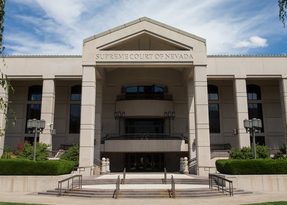
The Supreme Court of Nevada recently held that a superpriority lien for common expense assessments pursuant to Nevada Revised Statutes (NRS) 116.3116(2) does not include collection fees and foreclosure costs incurred by a homeowners’ association. In so ruling, the Court also held that an HOA’s covenants, conditions, and restrictions (“CC&Rs”) that purport to create a superpriority lien covering a different period of time than allowed by NRS 116.3116(2) is superseded and negated by the statute. A copy of the opinion in Horizons at Seven Hills Homeowners Association v. Ikon Holdings, LLC is available at: Link to Opinion. The HOA recorded its…

The Appellate Court of Illinois, First District, recently held that an allegation that the plaintiff is a “mortgagee” under the Illinois Mortgage Foreclosure Law (IMFL) is sufficient to plead its capacity to sue. A copy of the opinion in Wells Fargo Bank, N.A. v. Mundie is available at: Link to Opinion. The plaintiff mortgagee filed a complaint alleging defendant borrowers were in default, and that it was the “mortgagee” under the IMFL, 735 ILCS 5/15-1208. The plaintiff attached copies of the mortgage and the note indorsed in blank to the complaint. The defendants subsequently filed a motion to dismiss and requested…

The U.S. Court of Appeals for the Eleventh Circuit recently held that a borrower properly pleaded a “notice of error” claim under the federal Real Estate Settlement Procedures Act (RESPA), reversing the lower court’s grant of the servicer’s motion to dismiss. A copy of the opinion in Renfroe v. Nationstar Mortgage, LLC is available at: Link to Opinion. In 2006, a borrower refinanced her mortgage with a lender, with monthly payments of $998.68. Several years later, servicing of the loan was transferred. The borrower’s payments allegedly increased by about $100 after the transfer. The borrower claimed that she repeatedly contacted the…