

The Court of Appeals of California, Second Appellate District, recently held that a borrower failed to state a cause of action for alleged violations of the “dual tracking” and “single point of contact” provisions of California’s Homeowners Bill of Rights (HBOR), Calif. Civ. Code, §§ 2923.6, 2923.7, because: (1) the borrower did not allege acceptance of a loan modification agreement within 14 days after receiving it; and (2) the borrower’s allegations demonstrated that the servicer assigned a customer service representative to process the loan modification application. The Court also dismissed the borrower’s allegations of lack of standing to foreclose, illegal…
Posts published in “Mortgage Banking Foreclosure Law”
Mortgage Banking Foreclosure Law

The Massachusetts Supreme Judicial Court (“SJC”) recently affirmed a lower court’s ruling that a mortgagee’s failure to send a post-foreclosure notice required by Mass. Gen. Laws c. 244, § 15A does not render a foreclosure void. A copy of the opinion in Turra v. Deutsche Bank Trust Company Americas is available at: Link to Opinion. A mortgagee notified a borrower that he was in default under the terms of his mortgage. The mortgagee subsequently foreclosed on the property and commenced a summary process action. The borrower then filed suit against the mortgagee, and the mortgagee moved to dismiss the borrower’s…

The Appellate Division of the Circuit Court of the Fifteenth Judicial Circuit in and for Palm Beach County, Florida recently reversed summary judgment in favor of a mortgage loan servicer in a case filed by a borrower under the Florida Consumer Collections Practices Act (FCCPA), holding that: (a) the account statement at issue improperly attempted to collect a debt that was no longer owed, and was not preempted by the federal Truth in Lending Act (TILA); and (b) sending the statement to the borrower’s attorney did not avoid liability because the “competent lawyer” standard adopted by the Seventh Circuit does…
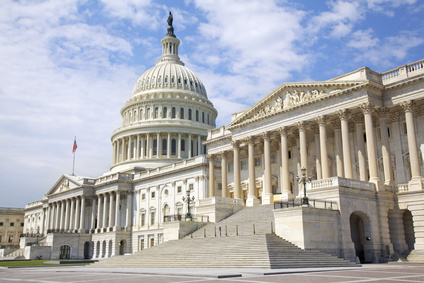
The Supreme Court of the United States recently held that the “sue-and-be-sued” clause in the Federal National Mortgage Association’s (“Fannie Mae”) charter does not confer subject matter jurisdiction on federal district courts over all cases involving Fannie Mae, and that an independent basis for subject matter jurisdiction must exist such as federal question or diversity. A copy of the opinion in Lightfoot v. Cendant Mortgage Corp. is available at: Link to Opinion. Justice Sotomayor’s opinion began by reciting the history of Fannie Mae, which began with the federal government’s attempts to stabilize and strengthen the residential mortgage market during the…
The U.S. District Court for the Middle District of Florida recently granted in part a mortgage loan servicer’s motion to dismiss a consumer borrower’s claims under the federal Fair Debt Collection Practices Act (FDCPA), the Florida Consumer Collection Practices Act (FCCPA), the Real Estate Settlement Procedures Act (RESPA), the federal Fair Credit Reporting Act (FCRA), and the federal Declaratory Judgment Act (DJA), holding: (a) the borrower’s complaint stated claims under the FDCPA and FCCPA because the allegations raised a plausible inference that the servicer knew the borrower was represented by counsel; (b) the borrower’s allegations that the statute of limitations…

The U.S. Court of Appeals for the Seventh Circuit recently held that a mortgage servicer’s response to a borrower’s written request for information complied with requirements of the federal Real Estate Settlement Procedures Act (RESPA) and, to the extent any information was missing, the borrower suffered no actual damages as a result. In so ruling, the Seventh Circuit rejected the borrowers’ pattern or practice argument under RESPA, based on two district court cases in 2012 and 2014 holding the servicer liable for RESPA violations, because “[t]wo examples of similar behavior — in different states, separated by a handful of years,…

The Court of Appeal of the State of Florida, Third District, recently reversed summary judgment in favor of a mortgagee-loss payee under a homeowner’s insurance policy, holding that the mortgagee failed to provide evidence of the value of the property after repairs, and therefore failed to show that repairing the property was not economically feasible. A copy of the opinion Alvarez-Mejia v. Bellissimo Properties, LLC, et al. is available at: Link to Opinion. A consumer took out a purchase money loan for $120,000 secured by a mortgage on the residential property. The original lender assigned the mortgage to two fractional…

The U.S. Court of Appeals for the First Circuit recently affirmed a bankruptcy court’s ruling that a mortgagee did not violate the discharge injunction in 11 U.S.C. § 524(a) by sending IRS 1099-A forms to borrowers after their discharge, agreeing that the IRS forms were not objectively coercive attempts to collect a debt. A copy of the opinion in Bates v. CitiMortgage, Inc. is available at: Link to Opinion. The borrowers obtained a mortgage loan secured by their home. They filed bankruptcy under Chapter 7 in 2008 and received a discharge of their personal liability for the loan in 2009.…

The Supreme Court of the State of Illinois recently affirmed the dismissal of a borrower’s claims for intentional and negligent infliction of emotional distress against her mortgagee, property inspection and preservation company and its local subcontractors, who entered the home after the borrower’s default to secure the property. In so ruling, the Court held that: (a) a direct victim’s claim for emotional distress must include an allegation of contemporaneous physical injury or impact that caused emotional distress, or that she was a bystander in a zone of physical danger that caused her to fear for her own safety and that…

The U.S. Court of Appeals for the First Circuit recently rejected a bankruptcy trustee’s effort to avoid a mortgage on the basis that the acknowledgment signed by the borrowers’ attorney-in-fact was defective under Massachusetts law, holding that the acknowledgment was not materially defective because as a matter of agency law the attorney-in-fact’s signature was the borrowers’ “free act and deed.” A copy of the opinion in HSBC Bank USA, N.A. v. Lassman is available at: Link to Opinion. The borrowers purchased a parcel of “registered land” in 1994 in North Attleboro, Mass. (the “subject property”). “Registered land” is real property…

The District Court of Appeal of Florida, Fifth District, recently ruled that a specific denial that a mortgagee complied with HUD’s pre-foreclosure regulations that were incorporated into the mortgage was a denial of a condition precedent to foreclosure that shifted the burden to the mortgagee to prove compliance.

The District Court of Appeal of Florida, Second District, recently rejected a borrower’s objection to a foreclosure sale under the theory the mortgagee failed to provide him with an “estoppel letter,” which would have allowed him to exercise his right of redemption. A copy of the opinion is available at: Link to Opinion. A foreclosure judgement was entered and the property was sold via public sale. Ten days later, the borrower objected to the sale of the property. The objection was denied and a certificate of title was issued to the mortgagee. The borrower appealed, arguing that the trial court…