

The Third District Court of Appeal of the State of Florida recently affirmed a final judgment awarding attorney’s fees to the borrowers in a mortgage foreclosure action, even though the borrowers failed to raise any request for attorney’s fees in their answer and affirmative defenses to the foreclosure complaint. In so ruling, the Court held that the mortgagee was on notice that the borrowers were seeking to recover their attorney’s fees and failed to timely object to the borrowers’ failure to plead entitlement. A copy of the opinion is available at: Link to Opinion. The mortgagee filed a mortgage foreclosure…
Posts published in “Mortgage Banking Foreclosure Law”
Mortgage Banking Foreclosure Law

A federal jury in the U.S. District Court for the Southern District of Texas found a mortgage lender and its president and CEO liable for almost $93 million in connection with alleged violations of the False Claims Act (FCA) and the Financial Institutions Reform, Recovery and Enforcement Act of 1989 (FIRREA), before application of the trebling and per violation penalties afforded under the statutes. The alleged violations occurred in connection with the lender’s participation in the Federal Housing Administration (FHA) mortgage insurance program. A copy of the U.S. Department of Justice’s (DOJ) press release is available at: Link to Press…

The District Court of Appeal of the State of Florida, Fourth District, recently reversed a trial court’s ruling in favor of mortgage loan borrowers based on the mortgagee’s failure to satisfy a condition precedent in paragraph 22 of the mortgage in accepting partial payments after default, holding that the mortgagee substantially complied with the requirements of the mortgage. In so ruling, the Court held that the mortgagee was not obligated to send new acceleration notices after each partial payment was received, as the borrowers never cured the default by paying the total amount needed to cure the default and reinstate…

The Federal Communications Commission recently denied the national Mortgage Bankers Association’s petition for exemption from the “prior express consent” requirement of the Telephone Consumer Protection Act for certain mortgage servicing calls and texts. A copy of the FCC’s Order denying the petition is available at: Link to FCC Order. As you may recall, the TCPA and the FCC’s implementing rules prohibit autodialed calls and texts “to wireless telephone numbers and other specified recipients except when made: (1) for an emergency purpose; (2) solely to collect a ‘debt owed to or guaranteed by the United States’; (3) with the prior express…

The District Court of Appeal of Florida, Second District, recently reversed an order denying a claim for a post-foreclosure sale deficiency judgment, holding that the trial court abused its discretion by excluding from evidence an expert’s testimony and report as to fair market value because the report was dated six days after the foreclosure sale. A copy of the opinion is available at: Link to Opinion. A final judgment of foreclosure in the amount of $2.4 million was entered against the borrower company and its principal. A third party purchased the property at a foreclosure sale for $100. The third…

The U.S. District Court for the Middle District of Florida recently held that a mortgage servicer did not have standing to invoke a jury trial waiver in a mortgage when the servicer was not a party to the mortgage.

The Appellate Court of Illinois, First District, recently held that a mortgagee’s affidavits detailing the due and diligent inquiry it undertook to attempt to personally serve a borrower were sufficient to allow service by publication in a mortgage foreclosure action.

The District Court of Appeal of Florida, Second District, recently confirmed that a substituted plaintiff would have to demonstrate its standing to enforce a note and mortgage at the time of trial, and the original plaintiff’s standing at the time the foreclosure complaint was filed. In so ruling, the Court rejected the argument a substituted mortgagee must also prove its standing at the time of a court-ordered substitution. A copy of the opinion is available at: Link to Opinion. A mortgagee filed a foreclosure action asserting two counts: an action to reestablish the note which was allegedly lost or destroyed,…

The U.S. Court of Appeals for the Fifth Circuit recently held that claims of an opt-out class in a previously-settled California state class action that released any existing federal Fair Labor Standards Act claims by mortgage loan officers against lenders that failed to pay them overtime were precluded by res judicata because the previous opt-out state court settlement met due process requirements, and the FLSA did not expressly or impliedly create an exception to the Full Faith and Credit Act, 28 U.S.C. § 1738. A copy of the opinion in Raymond Richardson, et al v. Wells Fargo Bank, N.A., et…
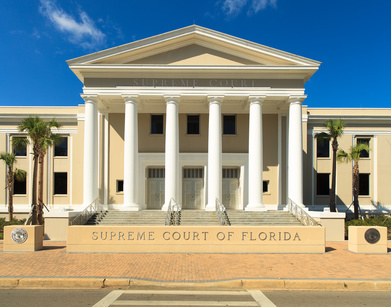
The Supreme Court of Florida today issued its long-awaited ruling in Bartram v. U.S. Bank, involving when Florida’s five-year mortgage foreclosure statute of limitations is triggered. The Court held that: “[W]ith each subsequent default, the statute of limitations runs from the date of each new default providing the mortgagee the right, but not the obligation, to accelerate all sums then due under the note and mortgage.” A mortgagee is “not precluded by the statute of limitations from filing a subsequent foreclosure action based on payment defaults occurring subsequent to the dismissal of the first foreclosure action, as long as the…

The U.S. Court of Appeals for the Seventh Circuit recently held that a mortgage loan servicer violated the federal Real Estate Settlement Procedures Act, 12 U.S.C. § 2601, et seq., by failing to properly respond to the borrowers’ request for information, but because the borrowers failed to provide evidence of damages stemming from the violation, the servicer was entitled to summary judgment. In so ruling, the Court held that the borrowers sufficiently alleged a concrete injury in fact that was fairly traceable to the servicer’s alleged violation of RESPA in order to have standing under Spokeo, but that “[w]hether the allegations…

The U.S. Court of Appeals for the Ninth Circuit recently held that the trustee of a California deed of trust securing a real estate loan was not a “debt collector” under the federal Fair Debt Collection Practices Act, because the trustee was not attempting to collect money from the borrower. In so ruling, the Court held that “actions taken to facilitate a non-judicial foreclosure, such as sending the notice of default and notice of sale, are not attempts to collect ‘debt’ as that term is defined by the FDCPA.” The Court also vacated the dismissal of the borrower’s federal Truth…