

The U.S. Circuit Court of Appeals for the Ninth Circuit recently reversed a trial court's denial of a motion to compel arbitration under the Federal Arbitration Act (FAA) in a putative class action involving privacy and data-collection practices laws.
Posts published in “Data Privacy and Security”
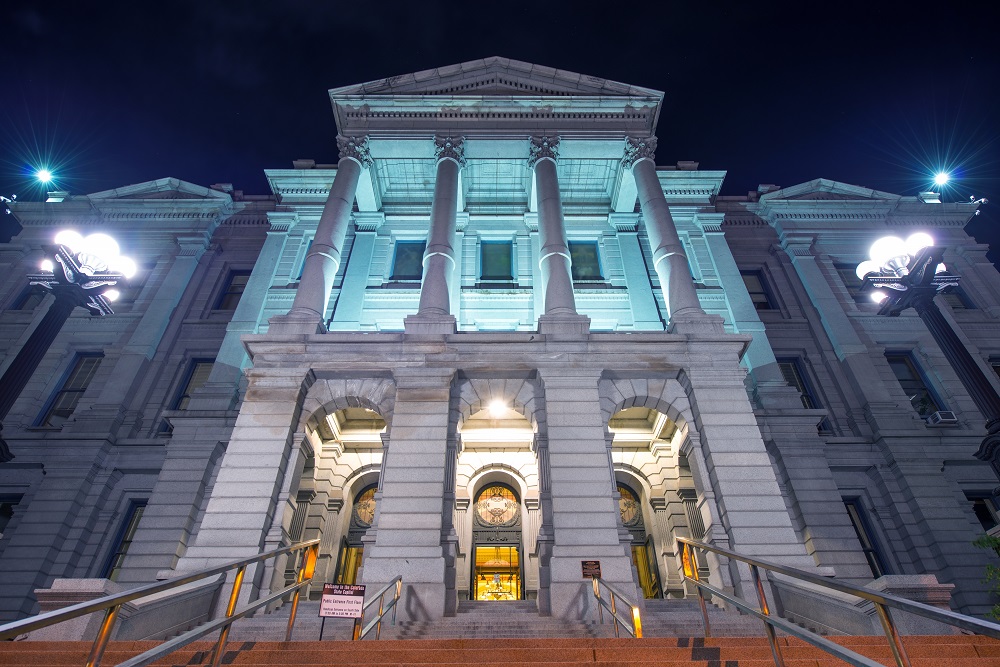
On July 6, Colorado Gov. Jared Polis signed into law Senate Bill 21-190, the Colorado Privacy Act. This makes Colorado the third state, behind California and Virginia, to enact comprehensive consumer data privacy legislation. The act becomes effective July 1, 2023.

On March 19, Sen. Robert Rodriguez (D), Chair of the Business, Labor & Technology Committee, and Sen. Paul Lundeen (R), Minority Whip, introduced Senate Bill 21-190 that would create the Colorado Privacy Act.

On March 15, the California Office of the Attorney General announced that additional regulations relating to the California Consumer Privacy Act (CCPA) had been approved, effective immediately.

On Feb. 21, Alabama Rep. Craig Lipscomb introduced House Bill 216 which would create the Alabama Consumer Privacy Act. The legislation is similar to the California Consumer Privacy Act but has far broader application.

On March 15, West Virginia Delegate Danny Hamrick, joined by 10 other Republicans, introduced House Bill 3159 which is consumer data privacy legislation similar to the California Consumer Privacy Act (CCPA), though arguably less business friendly.

The U.S. Court of Appeals for the Seventh Circuit recently affirmed a trial court’s order granting a putative class plaintiff’s motion to remand a case back to state court for lack of standing.

On March 2, Virginia Gov. Ralph Northam signed into law the Virginia Consumer Data Protection Act. House Bill 2307 was introduced Jan. 20, 2021, and a substitute was passed in the House just nine days later. Its companion, Senate Bill 1392, followed a similar trajectory and on Feb. 19, each chamber concurred in the other’s substitute. The Act will become effective Jan. 1, 2023.

In 2006 the Committee of Ministers of the Council of Europe designated each Jan. 28 as Data Protection Day, known outside of Europe as Data Privacy Day. It marks the day in 1981 that Convention 108 of the Council of Europe became open for signature.

On Jan. 11 Washington State Sen. Reuven Carlyle introduced SB 5062, the Washington Privacy Act (WPA). Its predecessors, SB 6281 and SB 5376, failed to pass in 2020 and 2019, respectively.

On the heels of the EU’s General Data Protection Regulation (GDPR) going into effect in 2018, and passage of the California Consumer Privacy Act of 2018 (CCPA), 2019 proved to be a banner year for introduction of state consumer data privacy legislation.

On Dec. 10, the California Office of the Attorney General issued its Fourth Set of Proposed Modifications to the California Consumer Privacy Act regulations. The changes affect only two subsections relating to the sale of personal information.