

The U.S. Court of Appeals for the Ninth Circuit recently affirmed the dismissal of a borrower’s complaint under the federal Fair Debt Collection Practices Act arising from a judicial foreclosure proceeding in Oregon, holding that the defendants were not attempting to collect a debt within the meaning of the FDCPA when only foreclosure was sought and not a deficiency judgment.
Posts published in “FDCPA”
Fair Debt Collection Practices Act

Joining similar rulings by the Eighth and Tenth Circuits, the U.S. Court of Appeals for the Fourth Circuit recently held that each violation of the FDCPA gives rise to a separate claim governed by its own statute of limitations period.

The U.S. Court of Appeals for the Seventh Circuit recently held that a debt collection verification letter, which sought to collect interest on a credit card debt for months after the time when the bank that issued the card did not send monthly statements, was not "false" and would not have misled their attorney in violation of the federal Fair Debt Collection Practices Act (FDCPA).

The U.S. Court of Appeals for the Seventh Circuit recently affirmed entry of summary judgment in favor of a debt collector that its collection letter language was “false, misleading or deceptive” in violation of section 1692e of the Fair Debt Collection Practices Act.

The U.S. Court of Appeals for the District of Columbia Circuit recently vacated a summary judgment order against a debtor on her claims against a debt owner and its debt collector for alleged violations of the federal Fair Debt Collection Practices Act because the debtor did not suffer a concrete injury-in-fact traceable to the alleged statutory violations and therefore lacked the required Article III standing.
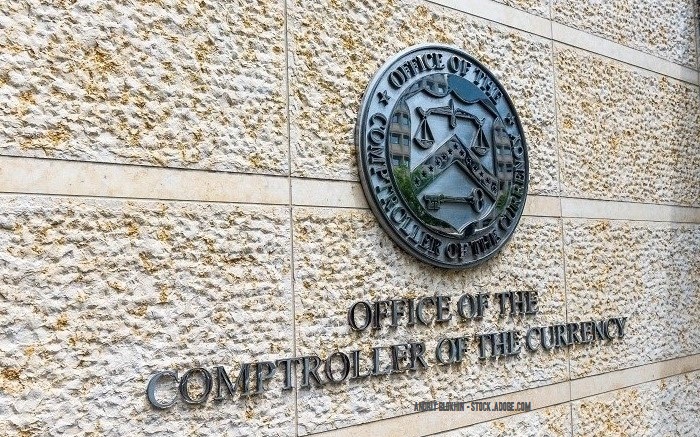
The Office of the Comptroller of the Currency (OCC) recently issued its final rule clarifying the “Permissible Interest on Loans that are Sold, Assigned, or Otherwise Transferred”.

The federal Consumer Financial Protection Bureau has extended the deadline for public comments on its Supplemental Notice of Proposed Rulemaking on time-barred debt disclosures to Aug. 4. The Bureau stated its reason for the extension as “the impact of the COVID-19 pandemic.”

The U.S. Court of Appeals for the Fifth Circuit recently reversed a trial court’s order sanctioning a consumer’s counsel for failure to promptly settle a lawsuit, but affirmed the trial court's order denying a motion to recuse because the trial court was not biased against the consumer.

The U.S. Court of Appeals for the Seventh Circuit recently held that in the absence of an FDCPA-specific rule regarding “present right to possession,” the Court must look to state law to determine whether a repossessor has a present right to possess the property at the time it was seized.

Nearly 30 years after authoring an opinion that has been rejected by the Second, Fourth and Ninth Circuits and ignored by the First, Fifth, Sixth and Seventh Circuits, the Third Circuit finally acknowledged that its original interpretation of 15 U.S.C. 1692g(a)(3) of the Fair Debt Collection Practices Act was wrong.

The U.S. Court of Appeals for the Fifth Circuit recently affirmed entry of summary judgment against a consumer debtor who claimed that a collection letter’s language, implying that interest or other charges (which the debt collector did not collect on debts referred to it by the creditor and were not referenced in the subject credit agreement) could accrue in the event of a default, violated the federal Fair Debt Collection Practices Act (FDCPA).

The U.S. Court of Appeals for the Sixth Circuit recently reversed the dismissal of a consumer’s Fair Debt Collection Practices Act (FDCPA) claim based on debt collection information that was visible through a transparent window on two debt collection letters.