

The U.S. Court of Appeals for the Seventh Circuit affirmed entry of judgment on the pleadings against a former condominium association board director’s claim that the association’s attorneys’ request for fees in a separate state court action filed by the association against the former director violated the federal Fair Debt Collection Practices Act (FDCPA).
Posts published in “FDCPA”
Fair Debt Collection Practices Act

The U.S. Court of Appeals for the Ninth Circuit recently affirmed summary judgment in favor of a guaranty agency that caused a set-off against a plaintiff’s Social Security benefits to recover a judgment assigned to it based on a defaulted student loan.

The U.S. Court of Appeals for the Seventh Circuit recently reversed the dismissal of a consumer’s second lawsuit against a debt collector for failure to notify a credit reporting agency that the debt was disputed.

The U.S. Court of Appeals for the Sixth Circuit recently affirmed a district court’s finding that a consumer lacked standing to pursue a lawsuit alleging that collection notices sent by a law firm violated the FDCPA because no attorney with the firm conducted a meaningful review of his debts.

The U.S. Court of Appeals for the Fifth Circuit recently reversed certification of a consumer class alleging that a debt collection letter violated the federal Fair Debt Collection Practices Act (FDCPA).

The U.S. Court of Appeals for the Seventh Circuit recently affirmed judgment in favor of a debt buyer and debt collector against a consumer debtor alleging that the collector’s debt collection letter violated the federal Fair Debt Collection Practices Act.

It has been an extraordinary 365 days for consumer financial services law. I cannot recall a year where so many states introduced legislation or proposed regulations or rules impacting the credit industry. At the federal level, proposed rules for the Fair Debt Collection Practices Act were (finally) released and California also proposed regulations under the California Consumer Privacy Act.

The U.S. Court of Appeals for the Ninth Circuit recently held that a collection letter offering payment options on a time-barred debt and listing “benefits” of paying the debt was not deceptive or misleading under the Fair Debt Collection Practices Act. Meanwhile, the CFPB is expected to take up the issue of time-barred debt disclosures early next year.

The U.S. Court of Appeals for the Eleventh Circuit recently reversed the dismissal of a pro se consumer’s claims under the federal Fair Credit Reporting Act (FCRA), holding that he stated a plausible claim for relief with his allegations that the defendant creditor obtained his credit report without his consent, and failed to reasonably investigate his credit reporting disputes. However, the Court affirmed the trial court’s dismissal of the consumer’s claim under the federal Fair Debt Collection Practices Act (FDCPA) that the creditor defendant used a “false name” in attempting to collect the debt owed to it.
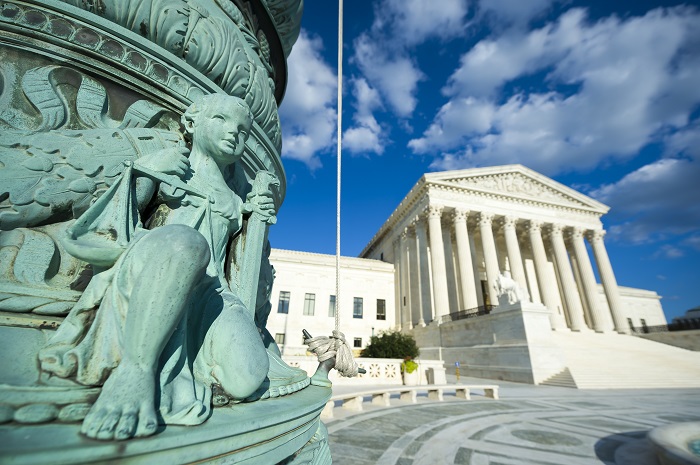
There is no discovery rule for federal Fair Debt Collection Practices Act claims, the U.S. Supreme Court held today. Affirming the U.S. Court of Appeals for the Third Circuit's decision in Rotkiske v. Klemm, today’s opinion also overrules an earlier ruling from the U.S. Court of Appeals for the Ninth Circuit, Mangum v. Action Collection Serv., Inc. There, the Ninth Circuit permitted FDCPA claims to run from when the plaintiff knows or has reason to know of the violation.
The U.S. Court of Appeals for the Seventh Circuit recently reversed the dismissal of a debtor’s claim under the federal Fair Debt Collection Practices Act, holding that the debtor stated a plausible claim that the dunning letter she received violated the FDCPA. Here, the Court held that the dunning letter at issue implied that the debt collector would file a 1099C form with the Internal Revenue Service, when in reality it was clear to the Seventh Circuit that the creditor would never file a 1099C form because the amount in each letter was less than $600.

The Office of the Comptroller of the Currency (OCC) and the Federal Deposit Insurance Corporation (FDIC) both recently issued proposed rules to “fix” the potential problems arising from the ruling in Madden v. Midland Funding, LLC, 786 F.3d 246 (2nd Cir. 2015), which called into question the “valid when made” doctrine. In addition, the FDIC’s proposal would make clear that the permissible interest on a loan would be determined at the time the loan is made, regardless of subsequent events such as changes in state law or the sale or assignment of the loan. The OCC’s Notice of Proposed Rulemaking is available…