
The U.S. Court of Appeals for the Third Circuit recently affirmed certification of a nationwide class of mortgage loan borrowers that could include tens, if not hundreds, of thousands of class members. More specifically, the Court held that the putative class plaintiff borrowers’ claims for violations of: (1) the federal Real Estate Settlement Procedures Act (RESPA); (2) the federal Truth in Lending Act (TILA); (3) the federal Home Ownership and Equity Protection Act (HOEPA); and (4) the federal Racketeer Influenced and Corrupt Organizations Act (RICO), satisfied the certification requirements of Federal Rules of Civil Procedure 23. A copy of the…
Posts published by “Maurice Wutscher LLP”
The attorneys of Maurice Wutscher are seasoned business lawyers with substantial experience in business law, financial services litigation and regulatory compliance. They represent consumer and commercial financial services companies, including depository and non-depository mortgage lenders and servicers, as well as mortgage loan investors, financial asset buyers and sellers, loss mitigation companies, third-party debt collectors, and other financial services providers. They have defended scores of putative class actions, have substantial experience in federal appellate court litigation and bring substantial trial and complex bankruptcy experience. They are leaders and influencers in their highly specialized area of law. They serve in leadership positions in industry associations and regularly publish and speak before national audiences.

The Florida Third District Court of Appeal recently reversed a judgment foreclosing a reverse mortgage, holding that the surviving spouse was a “borrower” under the terms of the mortgage, and thus the lender could not meet the condition precedent of her death in order to foreclose. A copy of the opinion is available at: Link to Opinion. In 2008, husband and wife signed a promissory note secured by a “home equity conversion mortgage,” commonly known as a “reverse mortgage.” The wife signed the mortgage, but not the promissory note. After the husband died in 2009, the lender sued to foreclose,…

Unsolicited e-faxes — documents converted to an email or attachment between the faxer and a recipient — are subject to the same consumer protections as unsolicited conventional faxes, according to a recent Federal Communications Commission declaratory ruling. The ruling built upon certain provisions of the Telephone Consumer Protection Act and the Junk Fax Protection Act, establishing that unsolicited communications that begin as faxes, including those converted to an electronic format after they are sent, justify consumer protection because e-faxes can cause some of the same issues and costs for businesses as conventional faxes. E-faxes “can increase labor costs for businesses,…
The New York Court of Appeals recently affirmed a trial court’s denial of a motion for deficiency judgment because the lender presented conclusory, insufficient evidence about the value of the property. In so ruling, the Court held that, even with uncontested deficiency motions, a lender that has foreclosed must present satisfactory evidence about the value of the property. However, the Court also held that when the lender presents insufficient evidence, the trial court should give the lender at least one additional chance to present adequate evidence. A copy of the opinion is available at: Link to Opinion. The lender filed…

The Florida Second District Court of Appeal recently reversed a trial court’s order in a mortgage foreclosure action limiting the liability of a loan servicer who acquired title by foreclosure for past-due condominium assessments, holding that the trial court lacked subject matter jurisdiction because the specific issue of assessments was not litigated or adjudicated by the trial court. A copy of the opinion is available at: Link to Opinion. The owner of a condominium unit failed to pay his mortgage loan, resulting in the loan servicer suing to foreclose the mortgage and obtaining title at the foreclosure sale as the…
The U.S. Court of Appeals for the Sixth Circuit recently held that, under the federal Telephone Consumer Protection Act, a called party gives his “prior express consent” to be called on a cellular telephone number with an automatic telephone dialing system (ATDS) when that person gives his creditor his cellular telephone number in connection with a debt owed, even where the person provides his cellular telephone number after the transaction is originally entered into, so long as the number is provided in connection with the debt. The Sixth Circuit further ruled that a person need only provide general consent to…

The U.S. Court of Appeals for the Eleventh Circuit recently confirmed that an entity is not a “debt collector” under the federal Fair Debt Collection Practices Act, where it does not regularly collect on debts owed to a third party, and debt collection is not the principal purpose of the entity’s business, even when the debt was in default at the time the entity acquired it. A copy of the opinion is available at: Link to Opinion. A lender sued a borrower to collect credit card debt. The parties entered into a settlement agreement, but the borrower failed to pay…

The U.S. Court of Appeals for the First Circuit recently denied a bank’s request pursuant to the Bank Secrecy Act to shield certain business records from being produced and used in a putative class action, holding that none of the subject documents constitute a draft SAR, or reflect the decision-making process as to whether a SAR should be filed, the process of preparing a SAR, or an attempt to explain the content of a SAR post-filing. A copy of the opinion is available at: Link to Opinion. The lead plaintiffs sued the bank, alleging that a customer used his accounts…

The U.S. Court of Appeals for the Eleventh Circuit recently held that a putative class action plaintiff provided his “prior express consent” under the federal Telephone Consumer Protection Act (TCPA) by listing his cell phone number on an information sheet he provided to the caller. A copy of the opinion is available at: Link to Opinion. The plaintiff donated blood plasma in return for payment at a blood plasma collection center owned and operated by the defendants, who buy and resell blood products. The plaintiff filled out several documents incident to the donations, including an information sheet that asked for his…
The U.S. Court of Appeals for the Second Circuit recently rejected claims by borrowers who failed to maintain hazard insurance on their mortgaged properties that they were overcharged by their loan servicer for lender-placed insurance, holding the claims were barred by the filed rate doctrine. A copy of the opinion is available at: Link to Opinion. The plaintiffs, borrowers who failed to purchase hazard insurance on their homes as required by the terms of their loans, sued their loan servicer, who purchased lender-placed insurance (LPI) from defendant insurers at rates approved by the applicable regulatory agencies, then sought to collect…
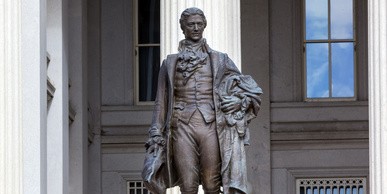
The U.S. Court of Appeals for the District of Columbia Circuit recently held that a bank has standing to challenge the constitutionality of the federal Consumer Financial Protection Bureau and the recess appointment of its director, reversing the district court and remanding. However, the Court also held that the plaintiff bank lacked standing to challenge the constitutionality of the federal Financial Stability Oversight Council and the government’s authority to liquidate “too big to fail” financial companies, affirming the district court’s judgment on those claims. A copy of the opinion is available at: Link to Opinion. The plaintiff bank joined by a…

The U.S. Court of Appeals for the Eighth Circuit recently affirmed the dismissal of a class action by Missouri borrowers alleging that various assignees and purchasers of second mortgages charged or collected illegal fees in violation of the Missouri Second Mortgage Loan Act (MSMLA), holding that plaintiff borrowers lacked standing to sue the defendants who did not service their loans. In so ruling, the Eighth Circuit refused to apply a state appellate court ruling made during the long history of this action, instead ruling that the MSMLA has a three-year statute of limitations, and that this three-year statute of limitations…