

The U.S. Court of Appeals for the Seventh Circuit recently held that a mortgagee could unilaterally cancel an erroneously recorded satisfaction of the loan where the borrower had not yet detrimentally relied on the erroneous satisfaction. A copy of the opinion in Trinity 83 Development, LLC v. ColFin Midwest Funding, LLC is available at: Link to Opinion. A company took out a loan from a bank secured by a mortgage. The bank sold the loan to a debt buyer. The debt buyer used a debt collector to collect payments. The debt collector inadvertently recorded a satisfaction of the debt releasing the mortgage before the…
Posts published in “Mortgage Banking Foreclosure Law”
Mortgage Banking Foreclosure Law

The Appellate Court of Illinois, First District, recently held that a borrower’s general denial that the mortgagee performed the conditions precedent of the mortgage contract prior to filing a foreclosure action was insufficient under Illinois Supreme Court Rules and therefore constituted a forfeiture of the issue. Accordingly, the Appellate Court affirmed the ruling of the trial court granting summary judgment in favor of the mortgagee. A copy of the opinion in The Bank of New York Mellon v. Wojcik is available at: Link to Opinion. After the borrower defaulted on her mortgage loan, the bank sent her a letter titled “Notice…

The U.S. Court of Appeals for the Seventh Circuit recently held that a mortgagee’s failure to take a deficiency judgment against a borrower who filed bankruptcy in a concluded state foreclosure action precluded the mortgagee from making a deficiency claim in the borrower’s bankruptcy proceeding. A copy of the opinion in BMO Harris Bank N.A. v. Anderson is available at: Link to Opinion. Two borrowers received a loan secured by a mortgage. They defaulted on the loan and the mortgagee filed a two-count complaint in Illinois state court seeking relief under the mortgage and the note. One of the borrowers and his wife later filed…

The U.S. Court of Appeals for the Eighth Circuit recently held that a borrower’s claims concerning lender-placed insurance practices were barred by res judicata, because the alleged practices were the subject of a class action suit in which the borrower was a class member who was provided notice of the settlement and did not object to the settlement. However, the Eighth Circuit also concluded that the servicer failed to establish that the statute of frauds barred the borrower’s claims concerning an alleged contract for interest rate reduction. A copy of the opinion in Calon v. Bank of America, NA is…

The U.S. Court of Appeals for the Seventh Circuit affirmed a trial court judgment in favor of an online real estate marketplace company and against the sellers of real property, finding that an estimate on the website of their property’s value did not violate the Illinois Real Estate Appraiser Licensing Act because the licensing act does not provide a private right of action. The Seventh Circuit also affirmed the trial court’s judgment in favor of the company on the sellers’ Illinois Uniform Deceptive Trade Practices Act claim, holding that the estimate did not violate the act because an estimate is…

In a mortgage loan repurchase action, the U.S. Court of Appeals for the Eighth Circuit recently reversed a trial court’s order granting summary judgment in favor of an originator and seller of loans, and held that the mortgage loan purchaser adequately and substantially complied with the contract in its demands that the originator repurchase several allegedly defective loans. In so ruling, the Eighth Circuit determined that the trial court erred in determining that the purchaser’s notice letters failed to satisfy a condition precedent to prescribe a time for the originator to correct the alleged defects, as the agreement governing the…
The Court of Appeal for the Second District of California held that California’s fee shifting statue in California Civil Code § 1717 permitted a former loan servicer and foreclosure trustee to recover their attorneys’ fees authorized by the contract, even though the deed of trust was assigned to another financial institution. However, the Court vacated the trial court’s award of attorneys’ fees against the borrower because the deed of trust only permitted attorneys’ fees to be added to the loan balance. A copy of the opinion in Chacker v. JPMorgan Chase Bank, N.A. is available at: Link to Opinion. The borrower…
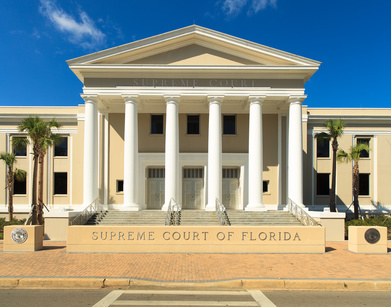
Reversing a ruling by the Fourth District Court of Appeal, the Supreme Court of Florida recently held that a mortgagee’s voluntary dismissal of an appeal made the borrower the prevailing party entitled to recover appellate attorney’s fees because the mortgagee maintained its right to enforce the mortgage contract that contained a prevailing party attorney’s fees provision until it dismissed the appeal. A copy of the opinion in Glass v. Nationstar Mortgage, LLC is available at: Link to Opinion. A mortgagee filed an in rem foreclosure action on a reverse mortgage on real property. The borrower moved to dismiss the complaint for…

In a case of first impression, the U.S. Court of Appeals for the Fifth Circuit recently held that a lender was not vicariously liable for a loan servicer’s alleged violation of the federal Real Estate Settlement Procedures Act holding that (a) the borrower failed to plead an agency relationship, “an essential element of a vicarious liability claim; and (b) even if an agency relationship existed, the lender could not be vicariously liable as a matter of law for the servicer’s alleged failure to comply with RESPA. A copy of the opinion in Christiana Trust v. Riddle is available at: Link to Opinion. The borrower took…
The U.S. Court of Appeals for the Fifth Circuit held that ambiguity in the deed of trust regarding the lender’s right to pay real estate taxes and establish an escrow account precluded entry of summary judgment in favor of the loan servicer on the borrower’s breach of contract claim. Additionally, the Court vacated a counterclaim for foreclosure in favor of the loan servicer and remanded the claim for reconsideration, noting that foreclosure would only be available if the servicer could show that it complied with contractual requirements. Finally, the Fifth Circuit affirmed the trial court’s rulings in favor of the…

The Supreme Court of Ohio recently held that a mortgagee may enforce a mortgage against a mortgagor who signed, initialed, and acknowledged the mortgage even though the body of the mortgage agreement does not identify the mortgagor by name. In so ruling, the Supreme Court of Ohio allowed a mortgagee to use parole evidence to determine the mortgage signatory’s intent where there is an ambiguity. A copy of the decision in Bank of New York Mellon v. Rhiel is available at: Link to Opinion. A bank issued a mortgage loan to husband and wife borrowers. Only the husband executed the note. Both…

The U.S. Court of Appeals for the Eleventh Circuit recently held that a mortgage loan with a post-plan maturity date was not discharged in a Chapter 13 bankruptcy because the plan did not “provide for” the debt and modify the repayment terms of the mortgage. The Eleventh Circuit also held that the debt was not discharged because discharge would violate 11 U.S.C. § 1322(b)(2)’s anti-modification provision for mortgages secured by the debtor’s principal residence. A copy of the opinion in Mildred M. Dukes v. Suncoast Credit Union is available at: Link to Opinion. The debtor had two mortgage loans on her…