

The New York City Department of Consumer and Worker Protection has adopted new rules requiring debt collectors to provide consumers with language preference disclosures and an affirmative obligation to request and record the consumer’s language preference.
Posts published by “Donald Maurice”
Donald Maurice provides counsel to the financial services industry, successfully litigating matters in the state and federal courts in individual and class actions. He has successfully argued before the Third, Fourth and Eighth Circuit U.S. Courts of Appeals, and has represented the financial services industry before several courts including as counsel for amicus curiae before the United States Supreme Court. He counsels clients in regulatory actions before the CFPB, and other federal and state regulators and in the development and testing of debt collection compliance systems. Don is peer-rated AV by Martindale-Hubbell, the worldwide guide to lawyers. In addition to being a frequent speaker and author on consumer financial services law, he serves as outside counsel to RMA International, on the governing Board of Regents of the American College of Consumer Financial Services Lawyers, and on the New York City Bar Association's Consumer Affairs Committee. From 2014 to 2017, he chaired the ABA's Bankruptcy and Debt Collection Subcommittee. For more information, see https://mauricewutscher.com/attorneys/donald-maurice/

The federal Consumer Financial Protection Bureau has extended the deadline for public comments on its Supplemental Notice of Proposed Rulemaking on time-barred debt disclosures to Aug. 4. The Bureau stated its reason for the extension as “the impact of the COVID-19 pandemic.”

Effective June 11, purchasers of consumer debt will face tougher requirements when initiating debt collection lawsuits in Washington state.

The Massachusetts attorney general has adopted a regulation deeming it illegal for a debt collector to telephone a Massachusetts resident to request payment of a debt or for a debt collector or a creditor to file a lawsuit to collect a debt.

A number of states have tolled the statutes of limitations on legal actions in response to COVID-19. The Iowa Supreme Court announced a toll on statutes of limitations in a March 17 order regarding court procedures. According to a March 23 operations summary from the Iowa Judicial Branch: “The March 17th order is intended to toll the statute of limitations or similar deadline for commencing an action in district court by 48 days. Tolling means you add that amount of time to the statute of limitations. So, for example, if the statute would otherwise run on April 8, 2020, it…

New York Gov. Andrew Cuomo has proposed a bill to license consumer debt collectors. The proposal comes as part of the governor’s 2021 “budget bill” and was introduced on Jan. 21. A copy is available here. The bill proposes an effective date of Oct. 1, 2020.

Effective Jan. 15, 2020, the Consumer Financial Protection Bureau increased the maximum civil monetary penalty it can impose within its jurisdiction. The increases are required by federal law, which requires agencies to adjust for inflation each civil monetary penalty within an agency’s jurisdiction by Jan. 15.

It has been an extraordinary 365 days for consumer financial services law. I cannot recall a year where so many states introduced legislation or proposed regulations or rules impacting the credit industry. At the federal level, proposed rules for the Fair Debt Collection Practices Act were (finally) released and California also proposed regulations under the California Consumer Privacy Act.
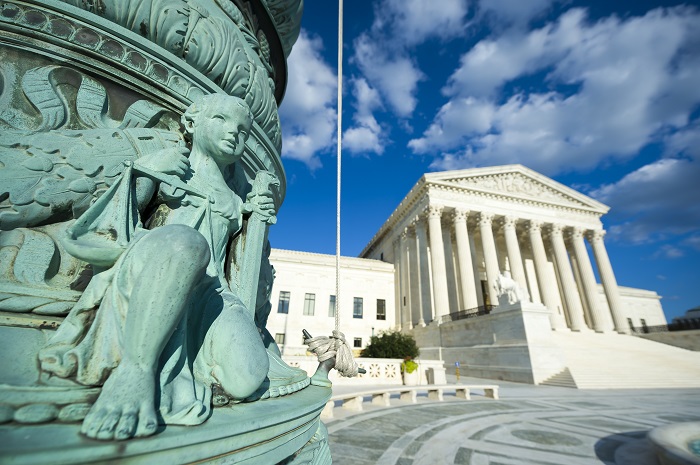
There is no discovery rule for federal Fair Debt Collection Practices Act claims, the U.S. Supreme Court held today. Affirming the U.S. Court of Appeals for the Third Circuit's decision in Rotkiske v. Klemm, today’s opinion also overrules an earlier ruling from the U.S. Court of Appeals for the Ninth Circuit, Mangum v. Action Collection Serv., Inc. There, the Ninth Circuit permitted FDCPA claims to run from when the plaintiff knows or has reason to know of the violation.
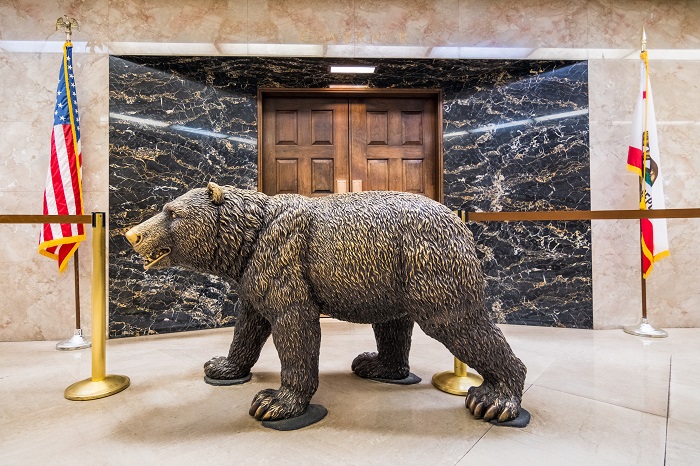
Three new laws signed by California Gov. Gavin Newsom in recent days will impact consumer credit in the state by capping interest rates on payday and other consumer installment loans, giving automatic exemptions for bank account levies and removing exemptions for attorneys and mortgage loans from the Rosenthal Act. California Financing Law Expanded AB 539 amends the California Financing Law, which licenses and regulates finance lenders and brokers, by imposing new restrictions on loans of $2,500 or more but less than $10,000. It also adds a rate cap on those loans so that the annual simple interest rate may not…

Lavallee v. Med-1 Solutions, LLC from the U.S. Court of Appeals for the Seventh Circuit examines whether an email from a debt collector was an “initial communication” and if it was, whether a clickable hyperlink serves as a proper means of providing the validation notice mandated by section 1692g(a) of the federal Fair Debt Collection Practices Act. These disclosures, sometimes called the “validation notice,” can be contained in what the FDCPA refers to as the “initial communication” or provided “in writing” within five days of the initial communication. While the debt collector was found to have violated the FDCPA, the decision…

The Consumer Financial Protection Bureau has announced it will allow more time for comments on its Notice of Proposed Rulemaking to implement the Fair Debt Collection Practices Act. The CFPB has extended the comment period by 30 days to Sept. 18. Years in the making, if adopted the proposed rules would bring significant changes to the form and manner of consumer debt collection subject to the FDCPA. According to the CFPB, its proposal “would set clear, bright-line limits on the number of calls debt collectors may place to reach consumers on a weekly basis; apply prohibitions on harassment or abuse, false…