

In response to a certified question from a bankruptcy court, the Arizona Supreme Court held that a recorded judgment lien attaches to homestead property where the judgment debtor has equity in excess of the $150,000 exemption under Arizona law.
Posts published by “Maurice Wutscher LLP”
The attorneys of Maurice Wutscher are seasoned business lawyers with substantial experience in business law, financial services litigation and regulatory compliance. They represent consumer and commercial financial services companies, including depository and non-depository mortgage lenders and servicers, as well as mortgage loan investors, financial asset buyers and sellers, loss mitigation companies, third-party debt collectors, and other financial services providers. They have defended scores of putative class actions, have substantial experience in federal appellate court litigation and bring substantial trial and complex bankruptcy experience. They are leaders and influencers in their highly specialized area of law. They serve in leadership positions in industry associations and regularly publish and speak before national audiences.
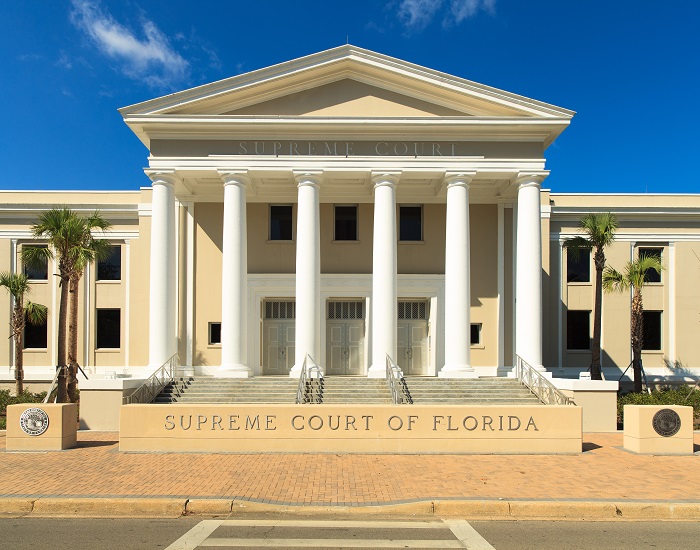
The U.S. Court of Appeals for the Eleventh Circuit recently held that a bank did not perfect its security interest in a business debtor’s assets because the two UCC-1 Financing Statements filed with the Florida Secured Transaction Registry that failed to correctly name the debtor were “seriously misleading” under Florida Statute Section 679.5061(2), as the Registry does not implement a “standard search logic” necessary to trigger the safe harbor exception set forth in Florida Statute Section 679.5061(3).

The U.S. Court of Appeals for the Second Circuit recently held that: (1) New York’s interest-on-escrow law is preempted by the National Bank Act of 1864 under the “ordinary legal principles of pre-emption,” Barnett Bank of Marion Cnty., N.A. v. Nelson, and (2) the amendments to the NBA in the Dodd Frank Wall Street Reform and Consumer Protection Act did not change this analysis.

The Supreme Court of Missouri recently reversed the judgment of a trial court in favor of two consumers on the finance company’s petition for a deficiency judgment in relation to a promissory note and security agreement financing the consumers’ vehicle.

The Supreme Court of Arizona recently held that recording a notice of trustee's sale, by itself, is not an affirmative act that accelerates the debt. Therefore, the Court held, the foreclosure at issue in the notice of trustee's sale in this case was not time-barred.

The U.S. Court of Appeals for the Third Circuit recently held that, because the home seller in an installment sale contract received a judgment of possession before the buyer filed for bankruptcy, the home was not part of the buyer’s bankruptcy estate.
8th Cir. Distinguishes ‘Article III’ and ‘Statutory’ Standing in FDCPA ‘Third Party Disclosure’ Case
8th Cir. Distinguishes ‘Article III’ and ‘Statutory’ Standing in FDCPA ‘Third Party Disclosure’ Case

The U.S. Court of Appeals for the Eighth Circuit recently affirmed the judgment of a trial court and held that non-consumers cannot bring a claim under Section 1692c(b) of the federal Fair Debt Collection Practices Act (FDCPA).

The U.S. District Court for the District of Massachusetts recently denied a motion to dismiss FDCPA and Mass. Gen. Law. Ch. 93 and 93A claims, holding that a constable qualifies as a “debt collector” under the Fair Debt Collection Practices Act and a “creditor” under Mass. Gen. Laws ch. 93.

The U.S. Court of Appeals for the Fifth Circuit recently reversed the class certification order of a trial court, finding sua sponte that the plaintiff lacked standing to bring a claim against a debt collection law firm under the federal Fair Debt Collection Practices Act (FDCPA).

The U.S. Court of Appeals for the Seventh Circuit recently affirmed a trial court’s dismissal of a class-action lawsuit at the summary judgment stage for lack of Article III standing.

The Appellate Court of Illinois, First District, recently affirmed a trial court’s order confirming a judicial sale of real property collateral following a mortgage foreclosure, as well as the trial court’s denial of the borrower’s motion to reconsider that order.

The U.S. Court of Appeals for the Eleventh Circuit recently affirmed a trial court’s denial of a plaintiff counsel’s motion for attorney’s fees, finding the firm’s prioritization of their interests over those of the class cut off any entitlement to attorney’s fees.