
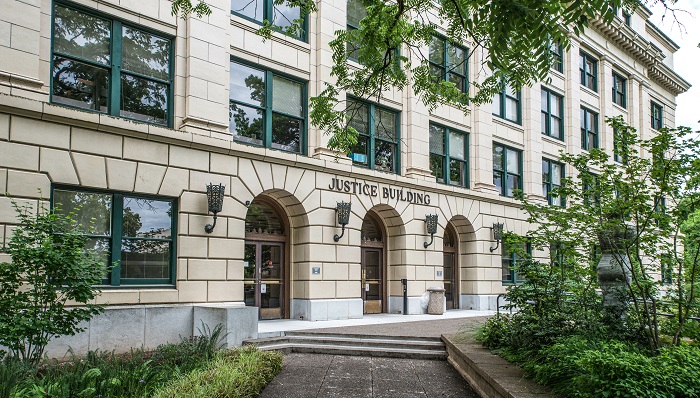
The Oregon Supreme Court recently held that a lien for delinquent condominium assessments has priority over a first mortgage or deed of trust, where the mortgagee fails to initiate a foreclosure action within the 90-day notice period prescribed by ORS § 100.450(7).
Posts published by “Maurice Wutscher LLP”
The attorneys of Maurice Wutscher are seasoned business lawyers with substantial experience in business law, financial services litigation and regulatory compliance. They represent consumer and commercial financial services companies, including depository and non-depository mortgage lenders and servicers, as well as mortgage loan investors, financial asset buyers and sellers, loss mitigation companies, third-party debt collectors, and other financial services providers. They have defended scores of putative class actions, have substantial experience in federal appellate court litigation and bring substantial trial and complex bankruptcy experience. They are leaders and influencers in their highly specialized area of law. They serve in leadership positions in industry associations and regularly publish and speak before national audiences.
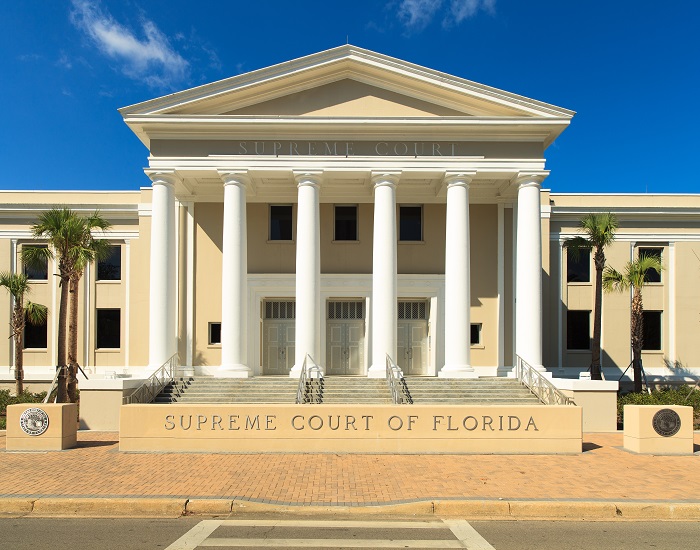
The Florida Supreme Court recently resolved a split in Florida law on the issue of attorney’s fees in favor of consumers, holding that debtors who prevail when a creditor sues under an account stated cause of action instead of for breach of the underlying credit card agreement are entitled to recover attorney’s fees under the so-called “reciprocity provision” of subsection 57.105(7), Florida Statutes.

The U.S. Court of Appeals for the Seventh Circuit recently affirmed the dismissal of a consumer’s claims under the federal Fair Debt Collection Practices Act (FDCPA) for failing to sufficiently allege a concrete injury to confer standing under Article III.

The Appellate Court of Illinois, Second District, recently affirmed a trial court order dismissing a borrower's attempt to vacate a default foreclosure judgment as untimely because the borrower's first attempt to undo the foreclosure, which was withdrawn without prejudice, did not toll the time to file the petition within 60 days from the borrower's first appearance in the case.

The U.S. Court of Appeals for the Eleventh Circuit recently vacated a trial court order denying certification of a class of similarly situated owners of allegedly defective refrigerators for claims against its manufacturer.

In a per curiam ruling, the Supreme Court of Texas recently held that the holder of a deed of trust was entitled to foreclose through equitable subrogation, even after it had failed to timely foreclose on its deed of trust.

The U.S. Court of Appeals for the Seventh Circuit recently vacated a trial court’s judgment of dismissal and remanded with instructions to hold an evidentiary hearing limited to the issue of whether the trial court had subject-matter jurisdiction over a plaintiff’s claim that a dunning letter violated the federal Fair Debt Collection Practices Act because it did not clearly state that interest would accrue on the debt.

The U.S. Court of Appeals for the Seventh Circuit recently held that a debt collection letter that references a legal remedy that could be pursued but is ultimately not pursued is not itself a sufficient basis to confer Article III standing.

The U.S. Court of Appeals for the Seventh Circuit recently vacated judgment in favor of a debt collector against putative class action claims raised by a consumer that its collection letter violated the federal Fair Debt Collection Practices Act (FDCPA) by threatening action that could not legally be taken and amounting to a false representation.

The U.S. Court of Appeals for the Seventh Circuit recently vacated judgment in favor of consumers and certification of a proposed class for claims that a debt collector violated sections 1692e and 1692f of the federal Fair Debt Collection Practices Act (FDCPA) by excluding a statement that interest would accrue on the debts in their collection letters.

The U.S. Court of Appeals for the Sixth Circuit recently held that loans incurred by a debtor to pay university tuition were “qualified education loans” under the Bankruptcy Code and thus were not dischargeable.

The U.S. Court of Appeals for the Seventh Circuit recently affirmed the dismissal of consumers’ claims that a collection letter used false, deceptive, or misleading representations, or otherwise unfair or unconscionable methods to collect a debt, in supposed violation of sections 1692e and 1692f of the federal Fair Debt Collection Practices Act (FDCPA).