

The Supreme Court of Ohio recently held that, when debt on promissory note secured by mortgage has been discharged in bankruptcy, the holder of the note may not pursue collection against the maker of note, but the mortgagee has standing to foreclose on the collateral property, and can use the amounts due on the note as evidence to establish that it may collect from the forced sale of the property. The Court also held that, regardless of whether the creditor can obtain a personal judgment on the note against the borrowers, the creditor must still prove that it is the…
Posts tagged as “Mortgage Law”

The Court of Appeals of California, Fourth District, recently held that a homeowner who has been foreclosed on by one with no right to do so — by those allegations alone — sustains prejudice or harm sufficient to constitute a cause of action for wrongful foreclosure. Citing Glaski v. Bank of America (2013) 218 Cal.App.4th 1079, the Appellate Court also held that, because the plaintiff properly alleged the foreclosure was void and not merely voidable, tender was not required to state a cause of action for quiet title or for cancellation of instruments. A copy of the opinion in Sciarratta v.…
In a putative class action alleging failure to timely record satisfactions of mortgages, the Supreme Court of Ohio recently held that a cease-and-desist order issued by the Federal Housing Finance Agency (FHFA) to Federal National Mortgage Association (Fannie Mae) did not preclude the trial court from exercising jurisdiction under the federal statute governing judicial review of FHFA orders. However, the Court also held that a different federal law bars the trial court from ordering Fannie Mae to provide monetary relief under the Ohio statute at issue, while Fannie Mae is under FHFA’s conservatorship, because the federal statute prohibits Fannie Mae…

The Supreme Court of Michigan recently held that the full credit bid rule did not bar contract claims brought by a mortgagee against non-borrower third parties. The Michigan Supreme Court also held that the closing instructions at issue constituted a contract upon which a breach of contract claim could be brought. A copy of the opinion in Bank of America, NA v. First American Title Insurance Co. is available at: Link to Opinion. The plaintiff lender partially financed four properties and shortly after closing, all four borrowers defaulted. The lender foreclosed by advertisement and subsequently bought all four properties at sheriff’s…
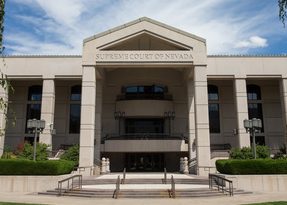
The Supreme Court of Nevada recently held that a superpriority lien for common expense assessments pursuant to Nevada Revised Statutes (NRS) 116.3116(2) does not include collection fees and foreclosure costs incurred by a homeowners’ association. In so ruling, the Court also held that an HOA’s covenants, conditions, and restrictions (“CC&Rs”) that purport to create a superpriority lien covering a different period of time than allowed by NRS 116.3116(2) is superseded and negated by the statute. A copy of the opinion in Horizons at Seven Hills Homeowners Association v. Ikon Holdings, LLC is available at: Link to Opinion. The HOA recorded its…

The Appellate Court of Illinois, First District, recently held that the form foreclosure complaint provided by the Illinois Mortgage Foreclosure Law (IMFL) complies with procedural due process guarantees of the Fifth and Fourteenth Amendments of the United States Constitution, and does not violate the Illinois Constitution’s separation of powers doctrine by usurping the Illinois judiciary’s rulemaking power. A copy of the opinion in Wells Fargo Bank N.A. v. Bednarz is available at: Link to Opinion. A mortgagee foreclosed on the defendant borrower’s residential property. The mortgagee’s complaint tracked a form complaint set forth in section 1504(a) of the IMFL. Section 15-1504(c)…

The U.S. Court of Appeals for the Sixth Circuit recently held that two borrowers lacked standing to challenge the validity of a deed of trust in a lien priority dispute interpleader action filed by the foreclosure trustee, as the borrowers did not dispute that they executed the deed of trust, the lien placed on the property was valid, or that they were in default. In so ruling, the Court rejected the borrowers’ argument that an alleged defect in the acknowledgement invalidated the deed of trust, because a validly recorded instrument that was not properly acknowledged shall nevertheless place “all interested…

The District Court of Appeal of Florida, Fourth District, recently upheld a trial court’s ruling that a plaintiff mortgage loan servicer had authority to initiate foreclosure proceedings against borrowers on a mortgage loan evidenced by an electronic note. The Fourth DCA also held that the e-note was a transferable record under the Uniform Electronic Transactions Act. A copy of the opinion in Rivera v. Wells Fargo Bank, NA is available at: Link to Opinion. In April 2008, the borrowers executed an electronic note (“e-note”) in favor of the lender, evidencing a loan secured by a mortgage. In January 2010, the servicer…

The U.S. Court of Appeals for the Fifth Circuit recently affirmed the dismissal of a borrower’s claims against her lender arising out of a foreclosure, holding among other things that alleged discrepancies as to the lender’s automatic payment withdrawal services did not state a claim under the Texas Deceptive Trade Practices Act (DTPA). In so ruling, the Court also affirmed the denial of a plaintiff borrower’s motion to join a non-diverse defendant holding that the motion was improperly brought for the purpose of defeating diversity jurisdiction. A copy of the opinion in Villarreal v. Wells Fargo Bank, NA is available at:…

The Illinois Appellate Court, First District, recently affirmed a trial court’s denial of a borrower’s motion to vacate a default judgment of foreclosure and sale, rejecting the borrower’s argument that the mortgagee failed to comply with certain Home Affordable Modification Program (HAMP) guidelines. A copy of the opinion in Wells Fargo Bank, N.A. v. Hansen is available at: Link to Opinion. In January 2007, the borrower executed a mortgage in the amount of $360,000, which was later assigned to the mortgagee. In December 2008, the mortgage filed a complaint seeking to foreclose due to default beginning in August 2008. The mortgagee…

The District Court of Appeal of the State of Florida, Fourth District, recently affirmed the trial court’s dismissal of the borrowers’ permissive counterclaims based on violations of the Florida Unfair Trade Insurance Practices Act (FUTIPA) in connection with an alleged “force-placed insurance scheme,” as the allegations were barred by the applicable four-year statute of limitations. The Court upheld the dismissal of the borrowers’ remaining compulsory counterclaims without prejudice for lack of jurisdiction, as the compulsory counterclaims were not appealable until a final disposition of the original case was obtained on the merits. A copy of the opinion in 4040 Ibis Circle,…
The U.S. Court of Appeals for the Fifth Circuit recently held that a mortgagee did not waive or abandon its right to foreclose by accepting payments after a default by the borrower, but before acceleration, when no representations were made to the borrower that payments less than the full obligation would bring the loan current. A copy of the opinion in Martin v. Federal National Mortgage Association is available at: Link to Opinion. A borrower obtained a loan secured by a deed of trust (“DOT”). The DOT obligated the borrower to make monthly payments and gave the mortgagee the right to accelerate…