
The U.S. Court of Appeals for the Seventh Circuit recently held that the federal Fair Debt Collection Practices Act (FDCPA) does not prohibit debt collectors from filing a collection lawsuit without intending to proceed to trial to obtain a judgment. A copy of the opinion in St. John v. Cach, LLC is available at: Link to Opinion. The defendant debt collectors filed suit in state court to recover on the plaintiffs’ delinquent credit card accounts. When the debtors contested the collection lawsuits, the debt collectors moved to voluntarily dismiss the actions with prejudice. The plaintiff debtors then sued the debt collectors…

The U.S. Court of Appeals for the Eighth Circuit recently held that two borrowers did not have standing to challenge an allegedly invalid mortgage assignment between creditors, because the borrowers could not show harm fairly traceable to the allegedly invalid assignment. Additionally, the Court held that the borrowers failed to state a plausible claim for relief for allegedly failing to comply with the notice of intent to accelerate provisions in their mortgage. A copy of the opinion in Brown v. Green Tree Servicing LLC is available at: Link to Opinion. The plaintiff borrowers alleged that their mortgage loan servicer did not…

The District Court of Appeal of the State of Florida, Fourth District, recently reversed a final judgment of foreclosure, holding that the mortgagee failed to prove that it had standing to foreclose because the note was specially indorsed to an affiliate of the lender, which later merged into the lender, but only the lender and not its former affiliate subsequently indorsed the note to the mortgagee, and the mortgagee did not present evidence of the extent of any assets transferred as part of the merger. A copy of the opinion in Abraham Segall v. Wachovia Bank is available at: Link to Opinion. The…

The U.S. Court of Appeals for the Eleventh Circuit recently affirmed summary judgment in favor of a mortgage loan servicer, holding that the trial court correctly refused to enforce the servicer’s acceptance of a short sale offer that contained an obvious clerical error in the form of a “bargain basement price.” A copy of the opinion in Patterson v. CitiMortgage, Inc. is available at: Link to Opinion. A borrower defaulted on a $550,000 mortgage loan in 2008 and wanted to sell his house to a third party through a short sale. The servicer made clear in the short sale payoff letter that…

The U.S. Court of Appeals for the Fifth Circuit recently held that a transfer of a tax lien to a tax buyer under Texas law does not constitute an extension of credit that is subject to the federal Truth in Lending Act (TILA). A copy of the opinion in Billings v. Propel Financial Services, LLC is available at: Link to Opinion. In four consolidated cases, the plaintiffs were individuals who agreed to have the defendant property tax buyers pay their real estate taxes in exchange for the transfer of their tax liens pursuant to Sections 32.06 and 32.065 of the Texas…

The U.S. Court of Appeals for the Fifth Circuit recently held that, although a bank had actual notice of an heir’s claim to her decedent father’s account funds, the bank’s compliance with the post-death affidavit provisions of California Probate § 13106(a) rendered the bank immune from liability for wrongful disbursement of the funds. In any event, the Court also held, the decedent’s surviving spouse who withdrew the funds had a probate claim that was statutorily superior to the heir’s claim. A copy of the opinion in Angelo v. Wells Fargo Bank is available at: Link to Opinion. Plaintiff heir’s father died…

The New York State Court of Appeals, the highest court in the state, recently held that a consolidated mortgage — often called a “Consolidation, Extension, & Modification Agreement” or “CEMA” — qualifies as the first mortgage of record under New York Real Property Law where there is no intervening lien. A copy of the opinion in Plotch v. Citibank, NA is available at: Link to Opinion. In 2000, the defendant lender extended a mortgage to a condominium unit owner for $54,000 and recorded the mortgage. The following year, the lender extended another mortgage for $38,000 and entered into a consolidation agreement…

The U.S. Court of Appeals for the Eleventh Circuit recently held that a collection letter sent to the consumer’s attorney is a “communication with a consumer” within the meaning of §1692g of the federal Fair Debt Collection Practices Act (FDCPA). Additionally, the Court held omitting a statement that disputes must be “in writing” in a disclosure under 15 U.S.C. §1692g does not amount to waiver of that requirement by the debt collector, and is instead an omission of a material term in violation of the FDCPA. A copy of the opinion in Connie Bishop v. Ross Earle & Bonan, P.A., et…

In a much-anticipated follow-up to its 2014 decision in Crawford v. LVNV Funding, LLC, 738 F.3d 1254 (11th Cir. 2014), the U.S. Court of Appeals for the Eleventh Circuit recently held that there is no irreconcilable conflict between the federal Fair Debt Collection Practices Act (FDCPA) and the Bankruptcy Code. In so ruling, the Court reversed the dismissal of two FDCPA cases filed against debt buyers that submitted proofs of claim on debts that were subject to a statute of limitations defense. A copy of the opinion in Johnson v. Midland Funding LLC and Brock v. Resurgent Capital Services, L.P. is available…

The Federal Communications Commission (FCC) recently issued a Notice of Proposed Rulemaking (NPRM) regarding recent amendments to the federal Telephone Consumer Protection Act (TCPA), seeking comment on among other things: (1) which calls are covered by the phrase “solely to collect” under the amendments; (2) the meaning of the phrase “a debt owed to or guaranteed by the United States” in the amendments; (3) how the FCC should restrict the number and duration of covered calls; (4) whether consumers should have a right to stop covered calls at any point the consumer wishes; and (5) whether callers should be required…
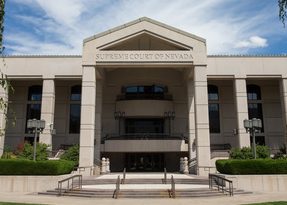
The Supreme Court of Nevada recently held that a superpriority lien for common expense assessments pursuant to Nevada Revised Statutes (NRS) 116.3116(2) does not include collection fees and foreclosure costs incurred by a homeowners’ association. In so ruling, the Court also held that an HOA’s covenants, conditions, and restrictions (“CC&Rs”) that purport to create a superpriority lien covering a different period of time than allowed by NRS 116.3116(2) is superseded and negated by the statute. A copy of the opinion in Horizons at Seven Hills Homeowners Association v. Ikon Holdings, LLC is available at: Link to Opinion. The HOA recorded its…

The Appellate Court of Illinois, First District, recently held that an allegation that the plaintiff is a “mortgagee” under the Illinois Mortgage Foreclosure Law (IMFL) is sufficient to plead its capacity to sue. A copy of the opinion in Wells Fargo Bank, N.A. v. Mundie is available at: Link to Opinion. The plaintiff mortgagee filed a complaint alleging defendant borrowers were in default, and that it was the “mortgagee” under the IMFL, 735 ILCS 5/15-1208. The plaintiff attached copies of the mortgage and the note indorsed in blank to the complaint. The defendants subsequently filed a motion to dismiss and requested…