

The U.S. Court of Appeals for the Fourth Circuit recently held that “escrow funds, insurance proceeds, or miscellaneous proceeds” are protected by the anti-modification provisions for Chapter 13 bankruptcies as “incidental property” under the definition of “debtor’s principal residence” in the federal Bankruptcy Code. A copy of the opinion in In re Birmingham is available at: Link to Opinion. A debtor filed a voluntary petition for Chapter 13 bankruptcy. One of the claims against the debtor was a mortgage loan secured by a deed of trust on the debtor’s primary residence. When the debtor filed his original Chapter 13 bankruptcy…

The Court of Appeals of California, Second Appellate District, recently held that a borrower failed to state a cause of action for alleged violations of the “dual tracking” and “single point of contact” provisions of California’s Homeowners Bill of Rights (HBOR), Calif. Civ. Code, §§ 2923.6, 2923.7, because: (1) the borrower did not allege acceptance of a loan modification agreement within 14 days after receiving it; and (2) the borrower’s allegations demonstrated that the servicer assigned a customer service representative to process the loan modification application. The Court also dismissed the borrower’s allegations of lack of standing to foreclose, illegal…

The U.S. Court of Appeals for the Seventh Circuit recently held that a bank’s relationship with a software services company, under which the software services company required its customers to use the bank for the depositary services ancillary to the software, did not violate anti-tying provisions of the federal Bank Holding Company Act, at 12 U.S.C. § 1972. A copy of the opinion McGarry & McGarry, LLC v. Rabobank, N.A. is available at: Link to Opinion. A bankruptcy trustee hired an administrative services company to provide a variety of services in a bankruptcy proceeding. Among other things, the administrative services…

The Massachusetts Supreme Judicial Court (“SJC”) recently affirmed a lower court’s ruling that a mortgagee’s failure to send a post-foreclosure notice required by Mass. Gen. Laws c. 244, § 15A does not render a foreclosure void. A copy of the opinion in Turra v. Deutsche Bank Trust Company Americas is available at: Link to Opinion. A mortgagee notified a borrower that he was in default under the terms of his mortgage. The mortgagee subsequently foreclosed on the property and commenced a summary process action. The borrower then filed suit against the mortgagee, and the mortgagee moved to dismiss the borrower’s…

The U.S. Court of Appeals for the Ninth Circuit recently held that a notice regarding overdue homeowners association (HOA) assessments contained language that overshadowed and conflicted with the homeowner’s federal Fair Debt Collection Practices Act debt validation rights. Limiting the scope of its ruling in Ho v. ReconTrust Co., NA, 840 F.3d 618, 620 (9th Cir. 2016), the Court rejected the debt collector’s argument that in sending the notice regarding overdue HOA assessments, it merely sought to perfect a security interest and was therefore subject only to the limitations under 15 U.S.C. § 1692f(6). A copy of the opinion in…

In a case of first impression, the U.S. Court of Appeals for the Ninth Circuit recently held that a prospective employer violated the federal Fair Credit Reporting Act by including a liability waiver in the same document as the statutorily required disclosure notice for obtaining a job applicant’s consumer report. In so ruling, the Ninth Circuit held that the company’s conduct was “willful” as a matter of law, because the language of the statute clearly contradicted the company’s interpretation, and whether or not the company “actually believed that its interpretation was correct is immaterial.” A copy of the opinion in…

The U.S. Court of Appeals for the Seventh Circuit recently held that the presence of capital as one of six components in the FDIC’s CAMELS rating does not mean that the rating as a whole is committed to agency discretion for the purpose of 5 U.S.C. §701(a)(2) and therefore unreviewable. A copy of the opinion in Builders Bank v. FDIC is available at: Link to Opinion. As you may recall, the FDIC is charged with conducting a full-scope on site examination every 12-18 months of the banks whose deposits it insures. In June 2015, the FDIC examined a bank and…

The U.S. Court of Appeals for the Third Circuit recently reversed the dismissal of a putative class action under the federal Fair Credit Reporting Act (FCRA) based on the theft of laptops from a health insurer containing sensitive personal information, holding that the plaintiffs had standing to sue because Congress created a statutory remedy for the unauthorized transfer of personal information, the disclosure of which constituted a cognizable injury, regardless of whether the stolen information was actually used improperly. A copy of the opinion in In re Horizon Healthcare Inc. Data Breach Litigation is available at: Link to Opinion. The…

The Appellate Division of the Circuit Court of the Fifteenth Judicial Circuit in and for Palm Beach County, Florida recently reversed summary judgment in favor of a mortgage loan servicer in a case filed by a borrower under the Florida Consumer Collections Practices Act (FCCPA), holding that: (a) the account statement at issue improperly attempted to collect a debt that was no longer owed, and was not preempted by the federal Truth in Lending Act (TILA); and (b) sending the statement to the borrower’s attorney did not avoid liability because the “competent lawyer” standard adopted by the Seventh Circuit does…
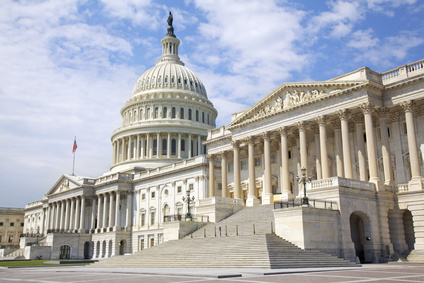
The Supreme Court of the United States recently held that the “sue-and-be-sued” clause in the Federal National Mortgage Association’s (“Fannie Mae”) charter does not confer subject matter jurisdiction on federal district courts over all cases involving Fannie Mae, and that an independent basis for subject matter jurisdiction must exist such as federal question or diversity. A copy of the opinion in Lightfoot v. Cendant Mortgage Corp. is available at: Link to Opinion. Justice Sotomayor’s opinion began by reciting the history of Fannie Mae, which began with the federal government’s attempts to stabilize and strengthen the residential mortgage market during the…
SCOTUS to Decide Whether Entity is FDCPA ‘Debt Collector’ Merely Because It Purchases Defaulted Debt
SCOTUS to Decide Whether Entity is FDCPA ‘Debt Collector’ Merely Because It Purchases Defaulted Debt
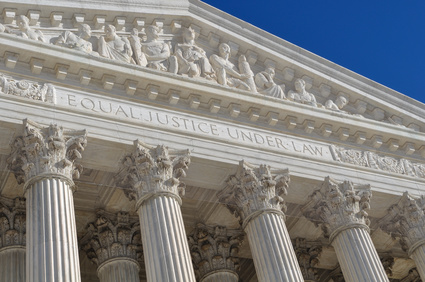
The Supreme Court of the United States recently decided that it will review the decision of the U.S. Court of Appeals for the Fourth Circuit in Henson v. Santander Consumer USA, Inc. As you may recall from our prior update, the U.S. Court of Appeals for the Fourth Circuit held that the fact that a debt is in default at the time it is purchased by an entity does not necessarily make that entity a “debt collector” subject to the federal Fair Debt Collection Practices Act (FDCPA), 15 U.S.C. § 1692 et seq. A link to the docket is available…

The U.S. Supreme Court heard oral argument Tuesday in Midland Funding v. Johnson. A primary issue before the Court is whether the federal Fair Debt Collection Practices Act is violated by the filing in a Chapter 13 bankruptcy case of a proof of claim representing a debt subject to an expired limitations period. The case originated from the Eleventh Circuit Court of Appeals, which along with its earlier decision in Crawford v. LVNV, held the FDCPA is violated in those instances. Every other Circuit Court of Appeals has since found otherwise. The oral argument indicated that at least six justices…