

Nevada has enacted a new law entitled the “Consumer Protection from the Accrual of Predatory Interest After Default Act,” which relates to consumer form contracts used in connection with retail installment transactions and the prejudgment and postjudgment interest and attorney fees that may be awarded by a court. Signed into law on June 3 and applicable only to contracts entered into on or after Oct. 1, the Act adds a new chapter to Title 8 of the Nevada Revised Statutes, “Commercial Instruments and Transactions.” The Act does not apply to a number of entities, including (but not limited to): banks;…
Posts published in “State & Local Regulation”

Three new laws signed by California Gov. Gavin Newsom in recent days will impact consumer credit in the state by capping interest rates on payday and other consumer installment loans, giving automatic exemptions for bank account levies and removing exemptions for attorneys and mortgage loans from the Rosenthal Act. California Financing Law Expanded AB 539 amends the California Financing Law, which licenses and regulates finance lenders and brokers, by imposing new restrictions on loans of $2,500 or more but less than $10,000. It also adds a rate cap on those loans so that the annual simple interest rate may not…

On June 25, the Illinois Legislature sent Senate Bill 1624 to Gov. J. B. Pritzker. The legislation adds a requirement to Illinois’ data breach notification law to notify the attorney general in the event of certain data breaches. The bill will become law if not returned by the governor by Aug. 24, 2019. The legislation would amend the Personal Information Protection Act, 815 ILCS 530/10, by requiring that any data collector who must inform more than 500 Illinois residents of a data breach also provide notice to the attorney general describing: the nature of the breach; the number of affected residents;…
Texas Enacts Amendments to Data Breach Notification Law; Creates Privacy Protection Advisory Council
Texas Enacts Amendments to Data Breach Notification Law; Creates Privacy Protection Advisory Council

On June 14, Texas Gov. Greg Abbott signed into law House Bill 4390 which amends the notification requirements of Texas’ data breach law and creates an advisory council to study data privacy laws generally. The provisions become effective Jan. 1, 2020. Currently, a person conducting business in Texas who “owns or licenses computerized data that includes sensitive data” must disclose the breach to any affected individual “as quickly as possible.” Tex. Bus. & Com. Code § 521.053(b). The amendments will require the disclosure “be made without unreasonable delay and in each case not later than the 60th day after the…

On April 30, Washington Gov. Jay Inslee signed into law Substitute House Bill 1531 which places new requirements on medical debt collectors. The new provisions go into effect July 28, 2019. The new law requires medical debt collectors to inform consumers in the initial written communication of the right to request the original account number, date of last payment and an itemized statement regarding the debt. For hospital debt, the communication must also notify consumers they “may be eligible for charity care from the hospital, together with the contact information for the hospital.” Upon an oral or written request for…
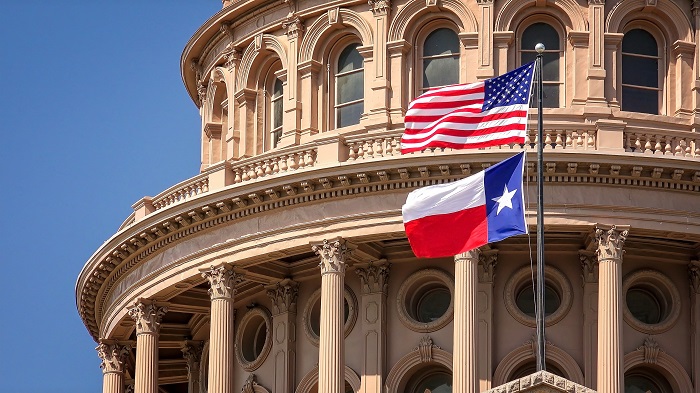
The Texas Legislature has passed House Bill 996 which limits when a debt buyer can initiate legal action or arbitration to collect consumer debt and requires specific notices with respect to out-of-statute debt. Upon approval by Texas Gov. Greg Abbott, the new provisions will become effective Sept. 1, 2019. Definition of a Debt Buyer “Debt buyer” is defined as “a person who purchases or otherwise acquires a consumer debt from a creditor or other subsequent owner of the consumer debt, regardless of whether the person collects the consumer debt, hires a third party to collect the consumer debt, or hires…

On March 26, West Virginia Gov. Jim Justice approved House Bill 3143 which amends the state’s Consumer Credit and Protection Act. First, current law provides that a Regulated Consumer Lender License is required for: Making regulated consumer loans; or Taking assignments of or undertaking direct collection of payments from or enforcement of rights against consumers arising from regulated consumer loans (W. Va. Code § 46A-4-101). The amendment excludes from licensing under this section collection agencies that are licensed pursuant to the West Virginia Collection Agency Act. Second, the bill increases the dollar thresholds for certain loans to which maximum finance…

A trio of bills currently pending in the New York State Senate would extinguish debt, require licensing and impose additional requirements in collection litigation. New York Senate Bill 691 and Senate Bill 2239 would completely extinguish the right to collect debt arising from a consumer credit transaction upon expiration of the statute of limitations. Senate Bill 691 goes a bit further by proposing to reduce the statute of limitations in “consumer credit transactions” to three years although it does provide certain exceptions. In addition, Senate Bill 691 would require certain disclosures to be provided to defendants in lawsuits brought on…

Newly introduced legislation in Texas, House Bill 996, addresses when a debt buyer can initiate legal action or arbitration to collect a consumer debt and requires specific notices with respect to out-of-statute debt. “Debt buyer” is defined as “a person who purchases or otherwise acquires a consumer debt from a creditor or other subsequent owner of the consumer debt, regardless of whether the person collects the consumer debt, hires a third party to collect the consumer debt, or hires an attorney to pursue collection litigation in connection with the consumer debt. The term does not include: a person who acquires a charged-off…

The Rhode Island Department of Business Regulation has adopted a record retention rule for debt collectors requiring that virtually all records be retained for a minimum of five years “following the transaction.” Records that must be retained include the following: all audio recordings of contact with customers; records of all customers contacted; all written correspondence (including that sent electronically) between the licensee and the consumer; complete files and documentation of every debt the licensee has attempted to collect including any and all documents relating to that debt; all communications received from customers including copies of all documents received in hard…

Legislation has been introduced in Illinois and New York that would require debt collectors to provide consumers with specific notices. In New York, Assembly Bill 876 would require the initial written communication to a debtor to include the following: “Debtor’s Rights As a debtor who owes or may owe a consumer claim, you are given some protection and rights by the New York and federal laws regulating debt collection procedures. You should be aware of your rights. 1. A debt collector may contact you or any member of your family or household directly. However, they may not contact you with such…

Colorado House Bill 19-1089, introduced on Jan. 14, would amend the Colorado Revised Statutes dealing with property and earnings exemptions by adding a new definition for “medical debt,” which would mean “any obligation or alleged obligation of a person to pay money arising out of the provision of health care services as defined in section 10-16-102(33).” Under the legislation, “the earnings of an individual whose family income does not exceed four hundred percent of the current federal poverty guidelines, adjusted for family size, are not subject to garnishment or levy under execution of attachment if the writ is the result of…