
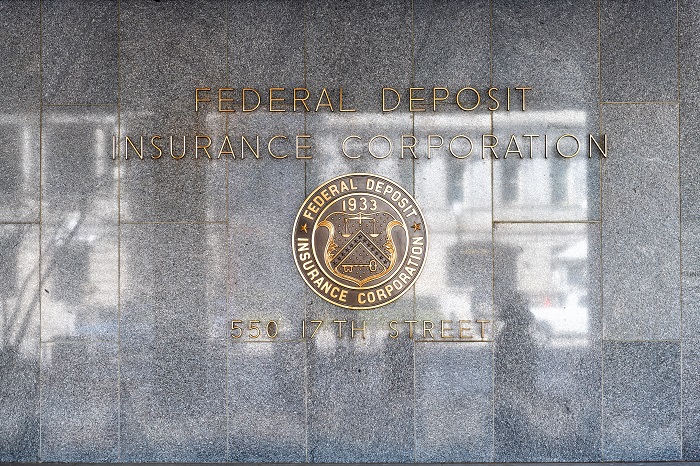
The Federal Deposit Insurance Corporation (FDIC) recently issued its Final Rule clarifying the “Permissible Interest on Transferred Loans.”
Posts published in June 2020

On June 27, the City of New York’s new rules aimed at language access in debt collection become effective. I am often asked whether they apply to creditors as well. It appears that particular provisions of the new rules do cover creditors collecting their own debt.

The Court of Appeal for the State of California, Fourth Appellate District, recently held that a trial court improperly denied a consumer’s motion to compel an answer to the consumer's special interrogatory, as the interrogatory was relevant to create a reasonable inference which would have defeated a lender’s motion for summary judgment.

The U.S. Court of Appeals for the Federal Circuit recently dismissed a lawsuit brought by a mortgage lender against the Government National Mortgage Association alleging that Ginnie Mae violated several guaranty agreements.
Yesterday ARM industry trade associations ACA, New York State Collectors Association and the Receivables Management Association International (RMAI), along with the National Creditors Bar Association and the New York State Bar Association submitted a joint letter to the New York City Department of Consumer and Worker Protection (formerly the Department of Consumer Affairs) requesting a 60-day extension to the effective date of its new language preference rules.

The U.S. Court of Appeals for the Seventh Circuit recently affirmed entry of summary judgment in favor of a debt collector that its collection letter language was “false, misleading or deceptive” in violation of section 1692e of the Fair Debt Collection Practices Act.
The New York City Department of Consumer and Worker Protection has adopted new rules requiring debt collectors to provide consumers with language preference disclosures and an affirmative obligation to request and record the consumer’s language preference.

The Court of Appeals of California, Fourth District, recently held as a matter of law that banks owe no duty to depositors to monitor other depositors’ accounts for fraud.

In an action by a lender and its affiliate to recover insurance proceeds for defense costs of a federal qui tam action and indemnification for the resulting settlement, the New York Court of Appeals recently held that an arbitration panel can reconsider an initial determination, or “partial final award,” so long as the determination or award does not resolve all of the issues submitted for arbitration.

The U.S. Court of Appeals for the District of Columbia Circuit recently vacated a summary judgment order against a debtor on her claims against a debt owner and its debt collector for alleged violations of the federal Fair Debt Collection Practices Act because the debtor did not suffer a concrete injury-in-fact traceable to the alleged statutory violations and therefore lacked the required Article III standing.

The U.S. Bankruptcy Appellate Panel for the Eighth Circuit recently held managing members of a limited liability company that filed a Chapter 11 bankruptcy were equitably estopped from asserting ownership of equipment where the members previously verified documents in the bankruptcy showing ownership of the equipment by the company.

The U.S. Court of Appeals for the Seventh Circuit recently held that absent unforeseen extraordinary circumstances, debtors in Chapter 13 cases cannot proceed on appeal in forma pauperis.