

The U.S. Court of Appeals for the First Circuit recently held that a failure to file a probate claim does not extinguish a mortgage lien under Rhode Island law. In so ruling, the Court held that “the piper must be paid.” A copy of the opinion is available at: Link to Opinion. The plaintiffs, a brother and sister, inherited their mother’s house. During her lifetime, the mother had taken out a reverse mortgage secured by the house. The mortgage securing the loan contained an acceleration clause and power of sale and became due and payable upon the mother’s death. The…
Posts published in “Year: 2015”

The U.S. District Court for the District of Oregon recently held that a notice provided pursuant to 15 U.S.C. 1692g that also contained additional language requesting that a dispute of the debt “please” be sent in writing violated the federal Fair Debt Collection Practices Act (FDCPA). In so ruling, the District Court held that such additional language overshadows or is inconsistent with a consumer’s right to orally dispute the debt within the 30-day period under 15 U.S.C. 1692g, and constitutes a false representation or deceptive means to collect or attempt to collect a debt under the FDCPA. A copy of…

The U.S. Court of Appeals for the Sixth Circuit recently affirmed judgment on the pleadings in favor of a debt collector because the voicemail in question, which was left at the plaintiff’s business, was not a “communication” as defined by the federal Fair Debt Collection Practices Act (FDCPA) because it did not convey information about the debt. A copy of the opinion is available at: Link to Opinion. A debt collector sent a letter to the debtor’s business requesting payroll information and later left a voicemail at the debtor’s business that stated the caller’s name, the name of the company…

Providing a putative class representative with complete relief did not moot his individual and class demand for declaratory and injunctive relief under the Florida Deceptive and Unfair Trade Practices Act (FDUTPA) according to a recent decision from a divided panel of Florida’s First District Court of Appeal. In Ahearn v. Mayo Clinic, 2015 Fla. App. LEXIS 16716 (Fla. Dist. Ct. App. 1st Dist. Nov. 6, 2015), Shawn Ahearn received emergency medical treatment from the Mayo Clinic in September 2013. Lacking health insurance for the medical care, he received a bill for $5,953.26. After paying $330 of the bill, Ahearn found fault with…
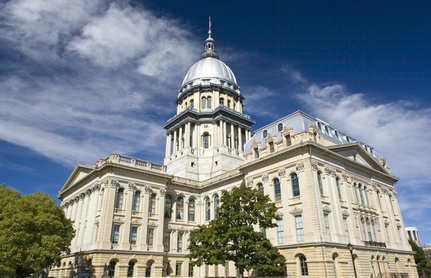
A recent Illinois bill provides a welcome fix to the Illinois Collection Agency Act (ICAA). The legislation, SB 1369, corrects amendments made to the ICAA this past August. Those amendments potentially expanded sections of the ICAA to commercial debt and would require disclosures contrary to (and possibly in violation of) the federal Fair Debt Collection Practices Act. The corrective legislation: Amends section 9.1 (Communication with persons other than debtor) to provide that when seeking location information from third parties, collection agencies and debt buyers must provide the name of their employer “only if expressly requested” Amends section 9.3 (Debt validation) to provide that a…

The U.S. Court of Appeals for the Eleventh Circuit recently held that a party challenging an arbitration agreement containing a delegation clause – requiring threshold determinations, such as whether an arbitration agreement is enforceable, to be made by an arbitrator – must challenge the delegation clause specifically, and not simply the agreement as a whole. A copy of the opinion is available at: Link to Opinion. The plaintiff, a Georgia resident, responded to a television advertisement for short-term loans by applying for the $1,000 loan using his computer. The lender was a South Dakota limited liability company located on Indian…
The District Court of Appeal of the State of Florida, Fifth District, recently reversed the entry of a judgment in favor of two borrowers in a foreclosure action, and confirmed that a current servicer does not need to present testimony from an employee of a prior servicer in order to admit the business records of the prior servicer into evidence at trial. A copy of the opinion is available at: Link to Opinion. The borrowers obtained their mortgage loan in 2006. They defaulted, and the prior servicer brought a foreclosure action in 2009. At that time, the borrowers sent a…
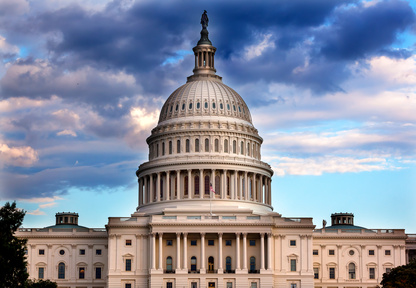
Bill targets collectors seeking repayment of government debt and debt buyers On Nov. 5, U.S. Senator Cory Booker introduced S. 2255, the “Stop Debt Collection Abuse Act of 2015.” Though primarily targeted toward debt collectors collecting on obligations owed to the federal government, the bill also brings debt buyers into the FDCPA definition of “debt collector.” The bill has been assigned to the Senate Banking Committee. Regarding private debt collectors under contract with the federal government: The definition of “debt” (15 USC 1692a(5)) is expanded to include “any obligation or alleged obligation of a consumer (i) to pay a loan,…
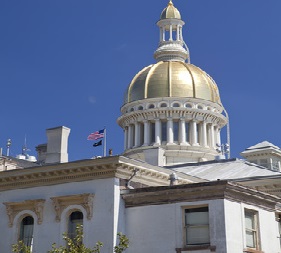
A New Jersey Senate bill introduced in 2014 relating to debt collectors’ responsibilities upon receipt of notice of identity theft or misidentification crossed over to the Assembly this week. S1344 received unanimous support in the Senate Commerce Committee, with amendments, and passed from the Senate on third reading by a vote of 32-0. The bill adopts the FDCPA’s definition of “debt,” but strays in its definition of “debt collector” which includes, in part, “any person who by any direct or indirect action, conduct, or practice, collects or attempts to collect a debt that is owed or due or asserted to…
The District Court of Appeal of Florida, Second District, recently reversed a final judgment of foreclosure where a substituted plaintiff failed to prove the original plaintiff had standing when suit was filed. In so ruling, the Appellate Court confirmed that it is not enough for a plaintiff to prove standing when the case is tried, it must also prove standing when the complaint was filed. A copy of the opinion is available at: Link to Opinion. A mortgagee initiated a residential foreclosure action after borrowers defaulted, and the borrowers responded that the mortgagee lacked standing. An assignee was then substituted…
The Consumer Financial Protection Bureau’s latest edition of Supervisory Highlights was released last week. I expected some stinging comments directed at debt collectors and debt buyers, given the recent consent decrees. What I found was the opposite. The 45-page report devoted only three paragraphs to supervised ARM entities. And, what was reported only indicates the potential for regulatory violation and did not note any instance where a consumer was actually harmed. Communications with Consumers Here the Bureau looked at supervised entities’ compliance with section 1692c of the Fair Debt Collection Practices Act. The CFPB’s beef here was that ARM companies had…
The federal Consumer Financial Protection Bureau (CFPB) recently released its Supervisory Highlights (Issue 9, Fall 2015), a copy of which is available here. The CFPB reported that, among other things, its “supervisory activities have either led to or supported six recent public enforcement actions, resulting in $764.9 million being returned to consumers and $50.7 million in civil money penalties,” plus supervisory resolutions resulting in “restitution of approximately $107 million to more than 238,000 consumers.” In addition, the CFPB provided a summary discussion of its fair lending and ECOA compliance examination methodologies, as well as a number of steps lenders may…