
I have today’s transcript from oral argument before the Supreme Court in Marx v. 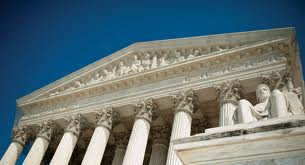 General Revenue.
Ms. Marx lost her Fair Debt Collection Practices Act (“FDCPA”) case against General Revenue. Under Federal Rule of Civil Procedure 54(d), which permits the court’s clerk to tax costs to a prevailing party, the trial court taxed her with General Revenue’s defense costs — not attorneys fees, just costs, and limited ones at that. Marx appealed to the Tenth Circuit Court of Appeals and argued she should not have to pay these costs because the FDCPA, at section 1692k(a)(3), only exposes her to costs if she brought the suit in “bad faith and the the purpose of harassment.” She lost that appeal and was able to get her case heard by the Supreme Court.
Here are some of the Justices’ quotes from today’s transcript:
Justice Ginsburg had a nice take on the issue:
[B]ut the statute can be read to say, “[Congress is] describing one category of case. We are describing the worst case; the bad-faith harassing plaintiff,” and the statute deals with that category of person and no other. So if you’re not a bad-faith harassing plaintiff, but you nonetheless lost, then you’re under 54(d).
* * *
Congress gave defendants something more here. Why — why would — why should it be that 54(d) would apply to the lender under the Truth in Lending Act but not to the lender under this act?
Justice Sotomayor:
I think your — your answer is always that Rule 54 obligates court to give costs. And this rule, as you read it, is a permissive grant only. Even in bad faith litigations, a court could choose not to give costs.
Justice Breyer:
But perhaps I’m unique in this, but I don’t just look at the language, I look at the context, I look at the purpose, and — and I don’t see anything in the language that gets rid of the background rule [54(d)], and I don’t see anything in the purpose that gets rid of the background rule, and I don’t see anything in the history that gets rid of the background rule.
Justice Kagan, noting that Rule 54(d)(1) cannot be used to tax costs if a statute can be read to “provide otherwise”:
Ms. Blatt, it — it seems to me that the — the most natural way to read this statute, [is] not [General Revenue’s] way . .
. . .All I’m trying to figure out is whether this Federal statute provides otherwise, and this Federal statute does provide otherwise.
It is quite an interesting read, but I’m not sure how much it reveals as to what SCOTUS may ultimately decide. I filed the amicus for the National Association of Retail Collection Attorneys’ Amicus committee in September. You can read that here.
